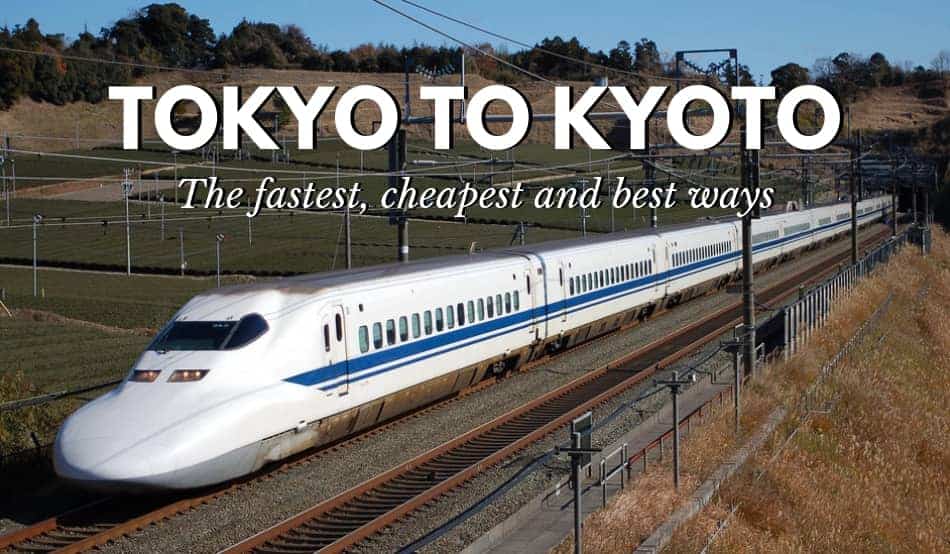
The Tokyo to Kyoto bullet train, officially the Tokaido Shinkansen, is the fastest, most reliable, and most popular way to travel between Japan’s modern capital and its ancient cultural heart. Covering roughly 513 km (318 miles), the journey takes as little as 2 hours 7–15 minutes on the Nozomi service. Trains run frequently from early morning until evening, delivering city-center to city-center convenience that planes and buses cannot match.
This guide covers everything you need: train types, current prices, booking methods, Japan Rail Pass rules, practical tips, and how to make the most of the ride—including the famous Mount Fuji view.
Why Choose the Tokyo to Kyoto Bullet Train?
Japan’s high-speed rail system is world-renowned for punctuality, comfort, and safety. The Shinkansen rarely runs more than a minute late. You board at Tokyo Station or Shinagawa Station and alight directly at Kyoto Station, with no airport transfers, security lines, or long bus rides. The ride is smooth, quiet, and equipped with power outlets, free Wi-Fi on many trains, clean restrooms, and space for standard luggage.
Compared with alternatives:
- Overnight highway buses take 7–8 hours and cost far less but sacrifice comfort and time.
- Flights appear faster on paper but become 4+ hours door-to-door once you factor in airport transfers and check-in. They are rarely worth it on this route.
For most travelers, the Tokyo to Kyoto bullet train is the clear winner.
Nozomi, Hikari, or Kodama: Which Train Should You Take?
Three services operate on the Tokaido Shinkansen:
- Nozomi: The fastest and most frequent. Journey time is typically 2 hours 7–15 minutes. It stops only at major stations (Tokyo, Shinagawa, Shin-Yokohama, Nagoya, Kyoto). Departures run every 5–10 minutes during the day. Ideal when time is limited.
- Hikari: About 2 hours 40 minutes. It makes a few extra stops but remains very comfortable. Best choice for Japan Rail Pass holders.
- Kodama: 3 hours 40 minutes or more because it stops at every station. Only useful if you plan intermediate stops or seek the absolute cheapest non-reserved option.
Most visitors choose Nozomi for speed or Hikari if using a JR Pass.
Current Prices for the Tokyo to Kyoto Bullet Train (2026)
Fares are fixed (with minor seasonal variations for reserved seats) and consist of a base fare plus a limited-express surcharge:
- Unreserved ordinary seat (Hikari/Kodama, or Nozomi when available): around ¥13,320
- Reserved ordinary seat: ¥13,850–¥14,370 (Nozomi is often at the higher end)
- Green Car (first class): roughly ¥18,400–¥19,000+
Prices are the same whether you depart from Tokyo Station or Shinagawa. During peak periods (Golden Week, Obon in mid-August, New Year), all Nozomi seats may be reserved only, so the cheaper unreserved option disappears.
Children aged 6–11 travel at half price. Infants under 6 ride free if not occupying a seat.
Japan Rail Pass and the Tokyo–Kyoto Route
The standard Japan Rail Pass fully covers Hikari and Kodama services. You can reserve seats free of charge at ticket offices or machines once your pass is activated.
Nozomi requires an additional “Only with Japan Rail Pass” supplement of approximately ¥4,960 for the Tokyo–Kyoto leg. Many travelers find the 25-minute time saving not worth the extra cost and simply take Hikari.
A 7-day JR Pass currently costs around ¥50,000. A simple Tokyo–Kyoto round trip does not justify the pass on its own. It becomes worthwhile when you add other long-distance journeys (Hiroshima, Kanazawa, etc.).
How to Buy Tickets
Several convenient options exist:
- Smart EX (smart-ex.jp) — Official JR Central system. Register with a foreign credit card, book reserved seats, and board with a QR code or linked IC card. Ticketless and highly recommended.
- Station ticket machines or Midori no Madoguchi (green ticket counters) — English interfaces available. Same-day purchase works well outside peak seasons.
- Third-party platforms such as Klook — Easy for international visitors; tickets are usually exchanged or delivered as e-vouchers.
Advance booking is wise during busy periods but unnecessary most of the year for unreserved seats. Reserved seats guarantee you sit together as a group and secure the best views.
Practical Tips for a Smooth Journey
- Stations: Board at Tokyo Station (platforms 14–19) or Shinagawa. Arrive at Kyoto Station, a major transport hub with subway, buses, and easy hotel access.
- Mount Fuji view: Sit on the right-hand side (seats D/E in ordinary cars) when traveling west from Tokyo. The best chance appears around 40–50 minutes after departure near Shin-Fuji, especially on clear winter or early-spring mornings.
- Luggage: Bags with total dimensions of 160 cm or less fit in overhead racks or between seats. Larger bags (161–250 cm) require a reserved oversized-baggage seat with space behind it. Book this when purchasing your ticket.
- Food and comfort: Buy ekiben (station bento boxes) before boarding. Green Car offers more legroom and quieter surroundings. All seats have power outlets on newer trains.
- Timetable: First Nozomi around 06:00, last around 21:24. Frequency is high throughout the day.
Making the Most of Your Arrival in Kyoto
Once you step off the bullet train at Kyoto Station, temples, gardens, and traditional streets are within easy reach by bus, subway, or taxi. The speed of the Shinkansen means you can leave Tokyo after breakfast and still enjoy a full afternoon exploring Fushimi Inari, Arashiyama, or the historic Gion district.
The Tokyo to Kyoto bullet train combines efficiency, comfort, and a touch of Japanese engineering excellence. Whether you choose the lightning-fast Nozomi or the JR Pass-friendly Hikari, the journey itself becomes part of the memorable experience of traveling Japan. Book your seat, claim the right side for Mount Fuji, and enjoy one of the world’s great rail rides.