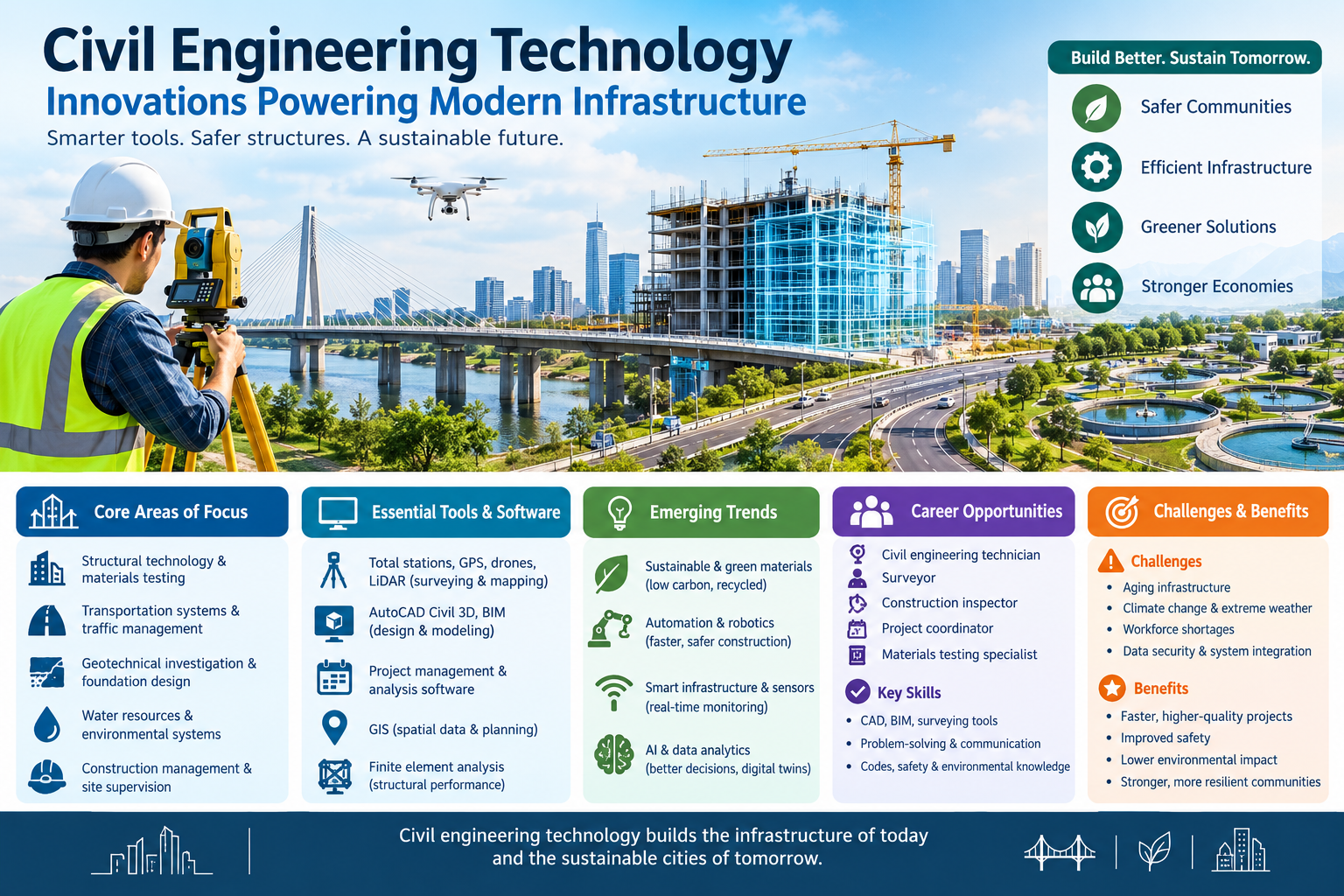
Civil engineering technology plays a central role in designing, building and maintaining the physical systems that support modern life. From highways and bridges to water treatment plants and sustainable urban developments, this field combines traditional engineering principles with advanced digital tools and materials. Professionals who master civil engineering technology help create safer, more efficient and environmentally responsible infrastructure.
As populations grow and climate challenges intensify, the demand for skilled practitioners continues to rise. Understanding current tools, methods and career pathways prepares individuals and organizations to meet these evolving needs.
What Is Civil Engineering Technology?
Civil engineering technology focuses on the practical application of engineering principles to construction and infrastructure projects. It bridges the gap between theoretical civil engineering and hands-on fieldwork. Graduates and professionals in this area often work with surveying equipment, computer-aided design software, project management systems and advanced construction materials.
Unlike pure civil engineering degrees that emphasize theoretical design and analysis, civil engineering technology programs typically stress applied skills, technical problem-solving and the use of modern instruments. This focus makes graduates highly employable in construction firms, government agencies and consulting companies.
Core Areas of Focus of Civil Engineering Technology
Key domains within the field include:
- Structural technology and materials testing
- Transportation systems and traffic management
- Geotechnical investigation and foundation design
- Water resources and environmental systems
- Construction management and site supervision
Each area relies on both traditional knowledge and emerging digital solutions.
Essential Tools and Software in Civil Engineering Technology
Modern projects depend heavily on specialized technology. Professionals use a combination of hardware and software to improve accuracy, reduce costs and accelerate delivery.
Surveying and Mapping Technologies
Total stations, GPS receivers and laser scanners have largely replaced older manual methods. Drones equipped with high-resolution cameras and LiDAR sensors now collect topographic data quickly and safely. These tools generate precise digital elevation models that feed directly into design software.
Design and Modeling Software
Computer-aided design (CAD) platforms such as AutoCAD Civil 3D remain industry standards. Building Information Modeling (BIM) tools allow teams to create detailed 3D models that integrate structural, mechanical and electrical information. These models support clash detection, quantity take-offs and lifecycle management.
Project Management and Analysis Platforms
Specialized software helps schedule resources, track budgets and monitor progress in real time. Finite element analysis programs evaluate structural performance under various loads. Geographic Information Systems (GIS) integrate spatial data for transportation planning and environmental impact studies.
Emerging Trends Transforming the Field
Several technologies are reshaping how civil projects are planned and executed.
Sustainable and Green Materials
Engineers increasingly specify low-carbon concrete, recycled aggregates and innovative composites. These materials reduce environmental impact while maintaining strength and durability. Life-cycle assessment tools help teams quantify long-term benefits.
Automation and Robotics
Robotic systems perform repetitive tasks such as rebar tying, bricklaying and concrete finishing. Autonomous construction equipment improves safety on large sites. Prefabrication and modular construction techniques, supported by digital models, shorten on-site schedules.
Smart Infrastructure and Sensors in Civil Engineering Technology
Sensors embedded in bridges, roads and buildings monitor structural health in real time. Data collected from these devices enables predictive maintenance and extends asset lifespan. Smart traffic systems use real-time information to reduce congestion and improve safety.
Artificial Intelligence and Data Analytics
Machine learning algorithms analyze large datasets to optimize designs, predict failures and improve resource allocation. Digital twins create virtual replicas of physical assets, allowing engineers to test scenarios before implementing changes in the field.
Career Opportunities and Skills Required
Civil engineering technology opens doors to diverse roles. Common positions include civil engineering technician, surveyor, construction inspector, project coordinator and materials testing specialist. Many professionals advance into supervisory or specialized design roles with experience.
Employers value strong technical skills combined with practical problem-solving ability. Proficiency in CAD, BIM and surveying instruments ranks high on most job descriptions. Knowledge of construction codes, safety regulations and environmental standards is equally important. Soft skills such as communication, teamwork and attention to detail help technicians collaborate effectively with engineers, contractors and clients.
Educational pathways typically include associate or bachelor’s degrees in civil engineering technology. Many programs incorporate internships or cooperative education experiences that provide valuable on-the-job training. Professional certifications in specific software or surveying techniques further enhance employability.
Challenges Facing the Profession
Despite rapid technological progress, the field faces several ongoing challenges. Aging infrastructure in many countries requires significant investment and skilled labor. Climate change introduces new design requirements related to extreme weather, flooding and sea-level rise. Workforce shortages in technical roles can delay projects and increase costs.
Data security and the integration of multiple digital platforms also present hurdles. Teams must ensure that information shared across software systems remains accurate and protected. Continuous learning is essential as tools and standards evolve.
Benefits of Advancing Civil Engineering Technology
Investing in modern tools and skilled personnel delivers clear returns. Projects finish faster and with fewer errors when teams use precise digital models and automated equipment. Improved safety records result from reduced exposure to hazardous tasks and better site monitoring. Sustainable practices lower long-term environmental costs and help organizations meet regulatory and public expectations.
Communities benefit from more resilient roads, cleaner water systems and energy-efficient buildings. These outcomes support economic growth and improve quality of life.
Frequently Asked Questions
What is the difference between civil engineering and civil engineering technology?
Civil engineering emphasizes theoretical design, analysis and research. Civil engineering technology focuses on applied skills, technical implementation and the use of practical tools and software in the field.
What software should students learn first?
Most programs introduce AutoCAD or Civil 3D early. Familiarity with BIM platforms, surveying software and basic GIS tools provides a strong foundation for entry-level positions.
Is the job market strong for civil engineering technology graduates?
Demand remains solid because infrastructure needs continue to grow. Graduates with hands-on experience and digital skills often find opportunities in both public and private sectors.
How does technology improve construction safety?
Drones, sensors and autonomous equipment reduce the need for workers to perform high-risk tasks. Real-time monitoring systems detect potential hazards before they cause accidents.
Can civil engineering technology professionals work internationally?
Yes. Core skills in surveying, CAD and project management transfer across borders. Additional knowledge of local codes and standards is usually required for specific markets.
Conclusion
Civil engineering technology continues to evolve as digital tools, sustainable materials and smart systems reshape infrastructure development. Professionals who combine practical technical skills with an understanding of emerging innovations position themselves for long-term success. By adopting modern surveying methods, advanced modeling software and data-driven decision-making, the industry delivers safer, more efficient and environmentally responsible projects. As communities face growing demands for resilient infrastructure, the role of civil engineering technology remains essential to building a sustainable future.