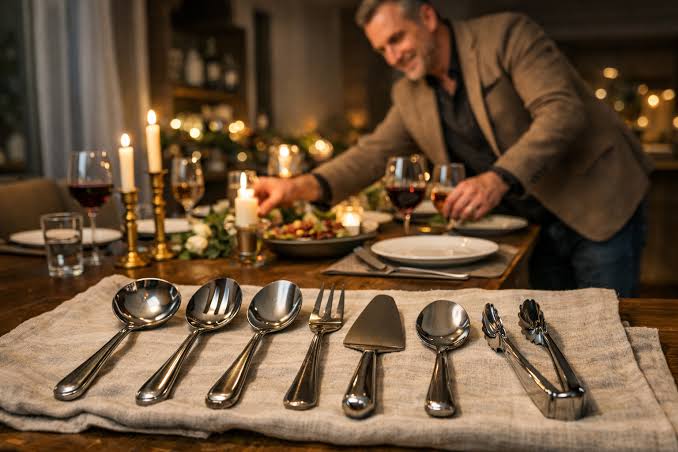
Serving utensils form the quiet backbone of any successful meal, whether you are hosting a formal dinner party or simply placing a weeknight casserole on the table. These tools do far more than move food from platter to plate. They protect the integrity of carefully prepared dishes, maintain hygiene standards, and signal to guests that thought and care have gone into the presentation. Understanding the range, materials, and proper use of serving utensils transforms ordinary meals into polished experiences and demonstrates genuine expertise in the kitchen and at the table.
Understanding the Core Categories of Serving Utensils
Serving utensils fall into several practical groups, each designed for specific textures, temperatures, and presentation styles. Large serving spoons remain the workhorses for soft or saucy foods such as mashed potatoes, stews, and pasta. Their deep bowls allow controlled portions without excessive dripping. Serving forks, often with longer tines, handle solid items like roasted meats, salads, or vegetable medleys. Tongs provide secure grip for slippery or delicate foods—think asparagus spears, grilled shrimp, or leafy greens—while minimizing damage. Ladles excel with liquids and soups, their curved bowls delivering smooth pours. Specialized pieces include cake servers with triangular blades, pie servers with serrated edges, and slotted spoons that drain excess liquid before plating.
Modern collections also incorporate multi-functional designs. Some spoons feature perforated edges for dual draining and serving roles. Others combine fork and spoon elements for versatility in buffet settings. Recognizing these categories allows hosts to match tools precisely to the menu, avoiding the common mistake of forcing one utensil to perform every task.
Materials That Define Quality and Longevity
Material choice directly influences performance, durability, and safety. Stainless steel dominates professional and home kitchens because it resists corrosion, withstands high temperatures, and cleans easily. Higher-grade stainless steel, often labeled 18/10, contains balanced chromium and nickel for superior shine and strength. Wood offers a warmer aesthetic and is gentle on nonstick cookware, though it requires more careful maintenance to prevent cracking or absorbing odors. Silicone provides heat resistance and nonstick properties ideal for scraping residual sauces from pans. Ceramic and porcelain pieces appear in formal settings for their elegant appearance but demand careful handling to avoid chips.
When selecting materials, consider both the food being served and the overall table aesthetic. A rustic wooden salad set complements farmhouse-style entertaining, while polished stainless steel suits contemporary or formal occasions. Quality construction matters equally. Look for solid, well-balanced handles that feel comfortable during extended use and seamless joins that prevent food particles from lodging in crevices.
Matching Serving Utensils to Specific Dishes and Occasions
Expertise shows most clearly in the thoughtful pairing of utensils to dishes. For a holiday turkey, a large carving fork and knife set paired with a deep serving spoon for gravy creates an efficient carving station. Seafood spreads benefit from specialized tongs and small forks that handle shells and delicate flesh without tearing. Cheese boards call for a combination of soft-cheese knives, hard-cheese cleavers, and small spreaders. Buffet-style gatherings require multiple sets of tongs, spoons, and forks placed strategically so guests can serve themselves cleanly without cross-contamination.
Temperature considerations also guide selection. Heat-resistant silicone or metal utensils work safely with hot dishes straight from the oven. For chilled items such as fruit salads or desserts, lighter materials prevent unwanted heat transfer. Formal dinners often feature matching sets that coordinate with the flatware, while casual gatherings allow more eclectic combinations that reflect personal style.
Practical Selection Criteria for Everyday and Special Use
Choosing serving utensils involves more than aesthetics. Weight and balance affect ease of use; overly heavy pieces tire the wrist during repeated serving, while flimsy ones lack control. Handle length should provide sufficient reach without crowding the serving platter. Edges matter too—sharp or serrated tips help portion dense foods cleanly, while rounded edges suit softer preparations.
Storage and space constraints influence decisions as well. Nested sets or those with hanging loops maximize limited drawer or wall space. For households that entertain frequently, investing in a core collection of versatile pieces plus a few specialized items offers the best balance of readiness and practicality. Beginners can start with a basic kit containing two large spoons, one serving fork, tongs, and a ladle, then expand as menus grow more ambitious.
Care, Cleaning, and Long-Term Maintenance
Proper care preserves both function and appearance. Most stainless-steel utensils tolerate dishwasher cycles, yet hand washing extends the life of wooden or silicone components. Dry pieces thoroughly before storage to prevent water spots or mold. Wooden utensils benefit from occasional oiling with food-safe mineral oil to maintain moisture balance and prevent splitting. Inspect regularly for loose rivets, bent tines, or worn edges, and retire damaged pieces promptly to uphold hygiene standards.
Storage practices further protect the investment. Drawer organizers or upright caddies keep tools accessible and prevent scratching. For formal sets, dedicated cases or felt-lined drawers maintain polish between uses. These habits reflect the same attention to detail that defines skilled hosting.
Elevating Hosting Through Thoughtful Presentation
Serving utensils contribute significantly to the visual and practical success of a meal. Arranging them neatly beside each platter signals order and readiness. Providing dedicated utensils for each dish reduces the risk of flavor transfer and keeps the table looking intentional. In buffet lines, placing utensils at the start of each station with handles facing outward encourages smooth guest flow.
Beyond utility, these tools can become subtle design elements. Coordinating finishes with other tableware creates cohesion. Introducing a single standout piece—such as an artisan wooden spoon or a vintage silver ladle—adds personality without overwhelming the setting. Guests notice these details, even if only subconsciously, and the overall experience feels more considered and professional.
Building Confidence Through Knowledge and Practice
Mastery of serving utensils develops through repeated use and observation. Pay attention to how different shapes interact with various foods. Notice which tools guests reach for most often and adjust future setups accordingly. Over time, the process becomes intuitive: the right utensil appears almost automatically for each dish, and serving flows without interruption or awkwardness.
This quiet competence forms part of broader kitchen expertise. It demonstrates respect for ingredients, for the effort invested in cooking, and for the people gathered around the table. Whether the occasion is a simple family supper or a multi-course celebration, well-chosen and properly used serving utensils elevate the moment and reinforce the host’s authority and care.
In the end, serving utensils are far more than functional objects. They are the final link between preparation and enjoyment, the tools that translate culinary effort into shared pleasure. Selecting them with intention, maintaining them with consistency, and deploying them with skill turns every meal into an opportunity to show genuine hospitality and refined practical knowledge.