Leather shoes look sharp and last for years when cared for properly. Dirt, salt, water spots, and everyday wear can dull their appearance and shorten their life if left untreated. Cleaning them correctly protects the material, restores color, and keeps them looking polished. This guide walks through how to clean leather shoes proven methods suitable for most smooth leather dress shoes, boots, and casual styles.
Gather the Right Supplies Before You Start
Successful cleaning begins with the proper tools. You will need a soft horsehair brush or microfiber cloth, a mild leather cleaner or saddle soap, clean water, a soft sponge or applicator pads, leather conditioner, and a quality shoe polish that matches your shoe color. Optional but helpful items include a suede brush (only if the shoes have suede panels), cotton balls or soft cloths for applying polish, and cedar shoe trees to help the shoes keep their shape while drying.
Avoid harsh household cleaners, alcohol-based products, or abrasive scrubbers. These can strip natural oils from the leather and cause cracking or discoloration. Always test any new product on a small, hidden area first.
Prepare the Shoes for Cleaning
Remove the laces and set them aside. If the laces are dirty, wash them separately by hand with mild soap and let them air dry. Insert shoe trees or stuff the shoes with clean paper to maintain shape. This step also helps the leather dry evenly later.
Knock off loose dirt and debris outdoors by tapping the soles together or using a soft brush. Pay attention to the welts and seams where grit collects. Never soak leather shoes in water. Excess moisture is one of the fastest ways to damage the material.
Step-by-Step Cleaning Process for How To Clean Leather Shoes
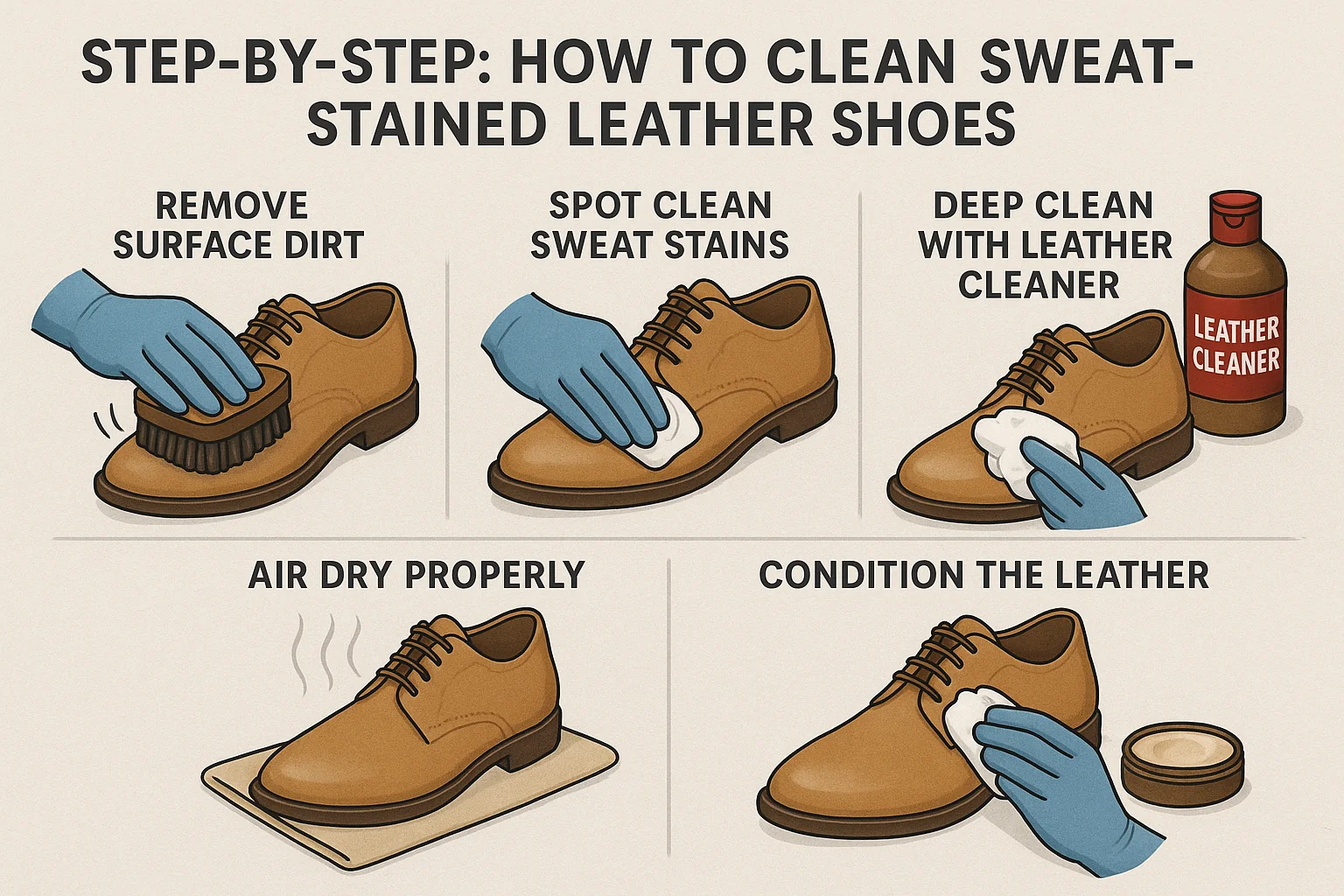
Start by wiping the entire shoe with a slightly damp microfiber cloth to remove surface dust. Then apply a small amount of leather cleaner or diluted saddle soap to a soft sponge or cloth. Work in gentle circular motions, focusing on one section at a time. Clean both the upper and the heel area thoroughly. For stubborn spots such as mud or salt stains, allow the cleaner to sit for a minute before wiping.
Rinse the sponge frequently in clean water and wring it out well so it stays only lightly damp. Once the shoe looks clean, wipe away any remaining cleaner residue with a fresh damp cloth, then dry the surface with a clean towel. Let the shoes air dry at room temperature, away from direct heat sources such as radiators, hair dryers, or sunlight. Heat can cause leather to shrink or crack.
Condition the Leather After Cleaning
Cleaning removes dirt but also some of the natural oils that keep leather flexible. Conditioning replenishes moisture and prevents drying. Apply a thin layer of leather conditioner with a soft cloth using circular motions. Allow it to absorb for 10 to 20 minutes, then buff lightly with a clean cloth. Over-conditioning can leave the surface greasy, so a light application is usually enough.
Polish for Protection and Shine
Once the conditioner has absorbed, apply a matching shoe polish. Use a soft cloth or applicator to work a small amount into the leather in circular motions. Cover the entire upper evenly. Let the polish dry for several minutes, then buff vigorously with a horsehair brush or soft cloth until a shine appears. For a higher gloss, some people use a few drops of water while buffing, a technique known as spit shining, though it requires practice.
Re-lace the shoes only after they are fully dry and polished. Store them with shoe trees in a cool, dry place away from direct sunlight when not in use.
Special Considerations for Different Types of Leather
Patent leather needs a gentler approach. Wipe with a soft damp cloth and use a specialized patent leather cleaner if needed. Avoid heavy conditioning products that can leave residue.
Suede and nubuck require different tools. Use a suede brush or eraser to lift dirt, and apply a protective spray designed for those materials. Never use regular leather cleaner or polish on suede, as it will ruin the nap.
For exotic leathers or expensive designer shoes, consider consulting a professional cleaner. Some finishes and dyes react poorly to standard home products.
Common Mistakes to Avoid
One frequent error is using too much water. Leather absorbs moisture and can warp or develop water stains. Another is skipping the conditioning step, which leads to dry, cracked leather over time. Applying polish without cleaning first traps dirt under the polish layer and creates an uneven finish. Leaving shoes near heat sources after cleaning is also damaging.
People sometimes clean leather shoes only when they look very dirty. Regular light cleaning after every few wears keeps them in better condition and makes deep cleaning easier when needed.
How Often Should You Clean Leather Shoes
Frequency depends on wear and environment. Dress shoes worn a few times a week benefit from a light wipe-down after each use and a full clean every four to six weeks. Boots exposed to rain, snow, or mud may need cleaning after every outing. In dry climates, conditioning becomes especially important to prevent cracking.
When to Seek Professional Help
Deep stains, scuffs that go through the finish, or shoes with complicated construction may need a cobbler or leather specialist. Professionals have access to stronger yet safer products and can re-dye or restore finishes that home methods cannot match. Regular professional care every year or two can significantly extend the life of high-quality pairs.
Maintaining Results Between Cleanings
Protect cleaned shoes with a light application of leather protector spray if recommended for the material. Rotate pairs so the same shoes are not worn every day. This allows leather to rest and recover its natural oils. Wipe off water and dirt as soon as possible after exposure. Consistent small habits prevent the need for aggressive cleaning later.
Proper cleaning of leather shoes is straightforward once you know the steps. With the right supplies, gentle technique, and regular attention, leather footwear stays comfortable, attractive, and durable for many seasons. Taking a few minutes after each wear and performing a deeper clean periodically protects your investment and keeps your shoes looking their best.