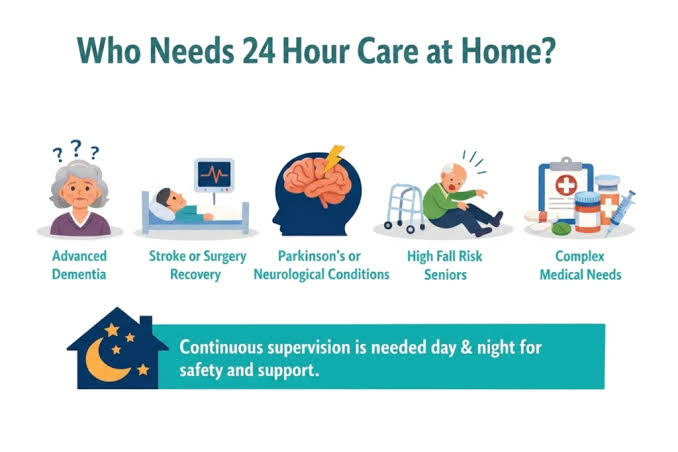
24 hour home care provides continuous, around-the-clock support so that individuals who cannot safely be left alone can remain in the familiar surroundings of their own home. This service typically involves professional caregivers working in rotating shifts or, in some cases, a live-in arrangement. It addresses needs ranging from basic daily assistance to specialized supervision for conditions such as advanced dementia, high fall risk, post-hospital recovery, or progressive frailty.
Unlike intermittent home care or facility-based options, true 24 hour coverage eliminates gaps in supervision. Caregivers remain present day and night, ready to assist with mobility, personal care, medication reminders, and emergencies. Families often turn to this model when loved ones require constant monitoring yet prefer to age in place rather than move to a nursing home or assisted living community.
What 24 Hour Home Care Typically Includes
Most 24 hour home care is non-medical, focusing on activities of daily living (ADLs) and instrumental activities of daily living (IADLs). Core services commonly include:
- Assistance with bathing, dressing, grooming, toileting, and incontinence care
- Help with transfers, walking, and repositioning to reduce pressure sores and fall risk
- Meal preparation, feeding support if needed, and hydration monitoring
- Medication reminders and basic health observation (vital signs in some cases)
- Light housekeeping, laundry, and errands
- Companionship, conversation, and engagement in preferred activities to combat isolation
When skilled nursing is required—such as wound care, injections, or complex medical monitoring—licensed nurses may be integrated into the schedule, though this increases cost. Agencies usually create a personalized care plan after an in-home assessment, adjusting support as needs change.
Two primary staffing models exist. Shift-based care uses two or three caregivers rotating through 8- or 12-hour shifts so someone is always awake and alert. Live-in care places one caregiver in the home who is available overnight but legally entitled to sleep periods; this model costs less but does not provide continuous awake supervision.
Who Benefits Most from Continuous In-Home Support
24 hour home care suits people who face safety risks when unsupervised. Common scenarios include late-stage dementia with wandering or sundowning, repeated falls, nighttime incontinence or confusion, recovery from major surgery or hospitalization, and end-of-life support under hospice. It also helps families who live at a distance or cannot provide full-time care themselves due to work or other responsibilities.
Many older adults and their families value the dignity and autonomy of remaining at home. Familiar routines, personal belongings, and neighborhood connections often support better emotional well-being and can reduce agitation in those with cognitive decline. Continuous presence also lowers the risk of facility-acquired infections compared with institutional settings.
Understanding Costs in 2026
Costs vary by location, care complexity, and staffing model. Recent national data place the median hourly rate for non-medical home care aides near $34. Full shift-based 24 hour coverage therefore averages roughly $800–$816 per day, or approximately $24,000–$25,000 per month. Annual figures commonly reach $290,000–$300,000.
Live-in arrangements typically range lower, often $10,000–$18,000 monthly where permitted by state labor rules, because the caregiver receives sleep time. Urban and coastal areas frequently exceed the national median by 20–45 percent, while some Midwest and Southern markets fall below it. Specialized dementia care or skilled nursing can add several dollars per hour.
Medicare generally does not cover ongoing custodial 24 hour care. It may pay for limited, intermittent skilled home health under strict criteria (homebound status, physician certification, and short-term need). Medicaid, long-term care insurance, Veterans Affairs benefits, and private payment are the primary funding sources. Families should obtain detailed quotes and explore eligibility early, as coverage rules differ by state and policy.
Compared with nursing homes, full 24 hour home care is often more expensive on a monthly basis. Semi-private nursing home rooms currently median near $9,500–$10,000 monthly in many markets, while private rooms run higher. However, home care delivers one-on-one attention rather than shared staff ratios and preserves the home environment—factors many families consider worth the premium when budgets allow.
Choosing a Reliable Provider and Building a Sustainable Plan
Selecting an agency or independent caregivers requires careful evaluation. Look for state licensing, thorough background checks, caregiver training in dementia or mobility assistance, liability insurance, and a clear process for shift handoffs and backup coverage. Ask how the provider handles caregiver illness, holidays, and care plan updates. Request references and, when possible, meet potential caregivers before starting service.
A strong care plan documents daily routines, preferences, medication lists, emergency contacts, and safety modifications such as grab bars or improved lighting. Regular family check-ins and communication logs help maintain consistency across shifts. Technology—shared digital notes, remote monitoring devices, or telehealth—can further support coordination.
Burnout prevention matters for both professional caregivers and family members. Agencies that schedule sustainable shifts, provide ongoing training, and offer respite options tend to deliver more reliable long-term care.
Balancing Benefits, Limitations, and Next Steps
The primary advantages of 24 hour home care are personalized attention, continuity in a familiar setting, and the ability to adapt quickly to changing needs. It can delay or avoid institutional placement while supporting dignity and quality of life. Limitations include high cost for true continuous coverage, potential caregiver turnover, and the need for adequate home space and safety features.
Families considering this option should begin with a professional needs assessment, obtain multiple cost estimates, review insurance or public benefits, and discuss preferences with the person receiving care whenever possible. Consulting geriatric care managers, elder law attorneys, or local Area Agencies on Aging can clarify local resources and regulations.
24 hour home care represents a significant commitment, yet for many it enables aging in place with safety and compassion. By understanding the services, realistic costs, and quality indicators, families can make informed decisions that align with both medical needs and personal values. Always verify current local rates and regulations, as they evolve, and prioritize licensed, transparent providers committed to high standards of care.



One thought on “24 Hour Home Care Guide: Costs, Benefits & Tips for Seniors”