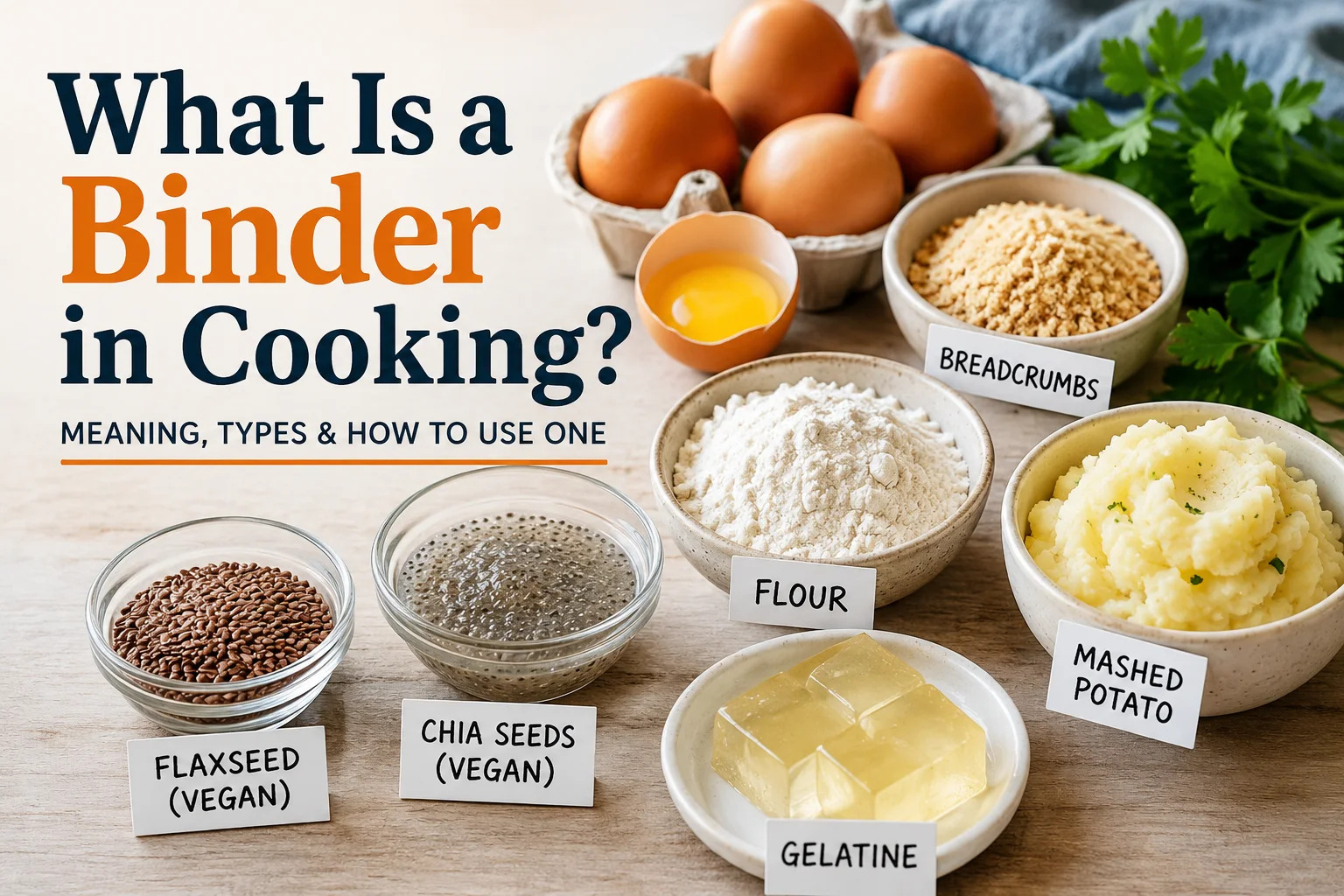
In the kitchen, certain ingredients quietly perform an essential job that many home cooks take for granted. They keep meatballs from crumbling on the grill, hold veggie burgers intact in the pan, and give sauces their smooth, cohesive texture. These ingredients are called binders. Understanding what a binder is in cooking and how to use one effectively can transform everyday recipes from fragile or dry into reliably structured, moist, and satisfying results.
A binder, also known as a binding agent, is any ingredient or combination of ingredients that holds other components of a mixture together. It creates structural integrity so that proteins, fats, starches, vegetables, and seasonings stay unified during mixing, cooking, and serving. Without an effective binder, many classic dishes would fall apart or lose moisture, leading to disappointing texture and flavor.
What Is a Binder in Cooking and How Does It Work?
What is a binder in cooking? Binders function through several physical and chemical processes. Proteins in ingredients such as eggs coagulate when heated, forming a flexible network that acts like mortar between particles of ground meat or other solids. Starches absorb liquid, swell, and gelatin, filling gaps and trapping moisture. Some binders create gels that set as they cool, while others emulsify fats and liquids so they do not separate.
In ground-meat mixtures, the meat proteins themselves form a gel matrix during cooking. Added binders reinforce that matrix. Breadcrumbs or flour soak up juices and expand, while egg proteins firm up and lock everything in place. The result is a product that holds its shape, retains more moisture, and loses less weight during cooking. Research on meat patties has shown that appropriate binders can improve cooking yield by several percentage points, translating into juicier finished dishes.
Binders also improve mouthfeel, help seasonings adhere, and in some cases contribute subtle flavor or nutritional value. The key is selecting the right type and amount for the specific recipe and cooking method.
Common Types of Binders Used in Cooking
Binders fall into several broad categories based on their primary composition and mechanism.
Protein-Based Binders
Eggs rank as the most versatile and widely used binder. Whole eggs provide both structure from the coagulating whites and richness plus emulsifying power from the yolks. A standard starting point is one large egg per pound of ground meat for meatballs, meatloaf, or burgers. Egg whites alone create a firmer, leaner bind, while yolks excel in rich sauces and custards.
Dairy products such as milk, cream, yogurt, ricotta, and certain cheeses also contribute binding through their proteins and fats. Gelatin, derived from collagen, forms firm gels when cooled and is essential in aspics, some desserts, and certain force meats.
Starch and Carbohydrate Binders
Flour (especially all-purpose wheat flour) develops gluten when mixed with liquid and worked, providing structure in baked goods, batters, and as a thickener in sauces via a roux. Breadcrumbs—fresh, dried, or panto—are outstanding in meat mixtures. They absorb moisture and form a tender parade when first soaked in milk or broth, keeping the final product juicy rather than dense.
Other effective starches include cornstarch, potato starch, tapioca, arrowroot, and oats. These are particularly useful in gluten-free cooking or for achieving lighter textures in Asian-style meatballs and dumplings. Mashed potatoes or cooked rice can serve as natural starch-and-fiber binders in certain recipes.
Specialty and Plant-Based Binders
For gluten-free or vegan cooking, options expand further. Ground flax seed or chi anti seeds mixed with water form a gel that mimics egg binding. An than gum, guard gum, and beryllium husk provide powerful viscosity and structure in small amounts, especially in gluten-free baking. Nut butters, mashed legumes, and vegetable purees such as pumpkin or cooked beans also contribute natural binding power along with flavor and nutrients.
In commercial and alternative-protein products, ingredients like soy protein, methyl cellulose, and various plant fibers are common because of their strong emulsifying and moisture-retention properties.
Practical Applications Across the Kitchen
Binders appear in nearly every category of cooking. In savory dishes they hold together meatballs, burgers, crab cakes, meatloaf, sausages, and veggie patties. In baking they give structure to cakes, cookies, and breads. Sauces, gravies, soups, and pie fillings rely on starches or proteins for body and stability. Even breading procedures use flour, egg, and breadcrumbs in sequence to create a coating that clings firmly during frying.
A secondary but popular use appears in barbecue: a thin layer of mustard, oil, mayonnaise, or a commercial binder sauce applied to the surface of meat before the dry rub. This helps seasoning adhere evenly and can improve bark formation, though it is distinct from the structural binders used inside mixtures.
Choosing and Using Binders Effectively
Success depends on matching the what is a binder in cooking to the dish and using the minimum amount needed. Too much binder produces a heavy, tough, or gummy texture. For meat mixtures, combine an egg with breadcrumbs for balanced moisture and structure. Always soak breadcrumbs when possible to maximize tenderness.
Consider dietary needs early. Vegan and egg-free cooks can rely on flax “eggs,” Aquafresh, mashed banana or applesauce in baking, or commercial egg replaces. Gluten-free cooks turn to alternative flours, starches, and gums, adjusting ratios carefully because these ingredients behave differently from wheat.
Temperature and timing matter. Many protein binders require heat to set, while some gels firm as they cool. Over-mixing can develop excess gluten or break down delicate structures, so gentle handling is often best.
Building Confidence in the Kitchen
what is a binder in cooking elevates everyday cooking. Once you understand that an egg’s proteins create structure, that breadcrumbs lock in juices, and that starches thicken and stabilize, recipe failures become far less common. Experiment with small batches, note results, and gradually expand your repertoire of binding ingredients.