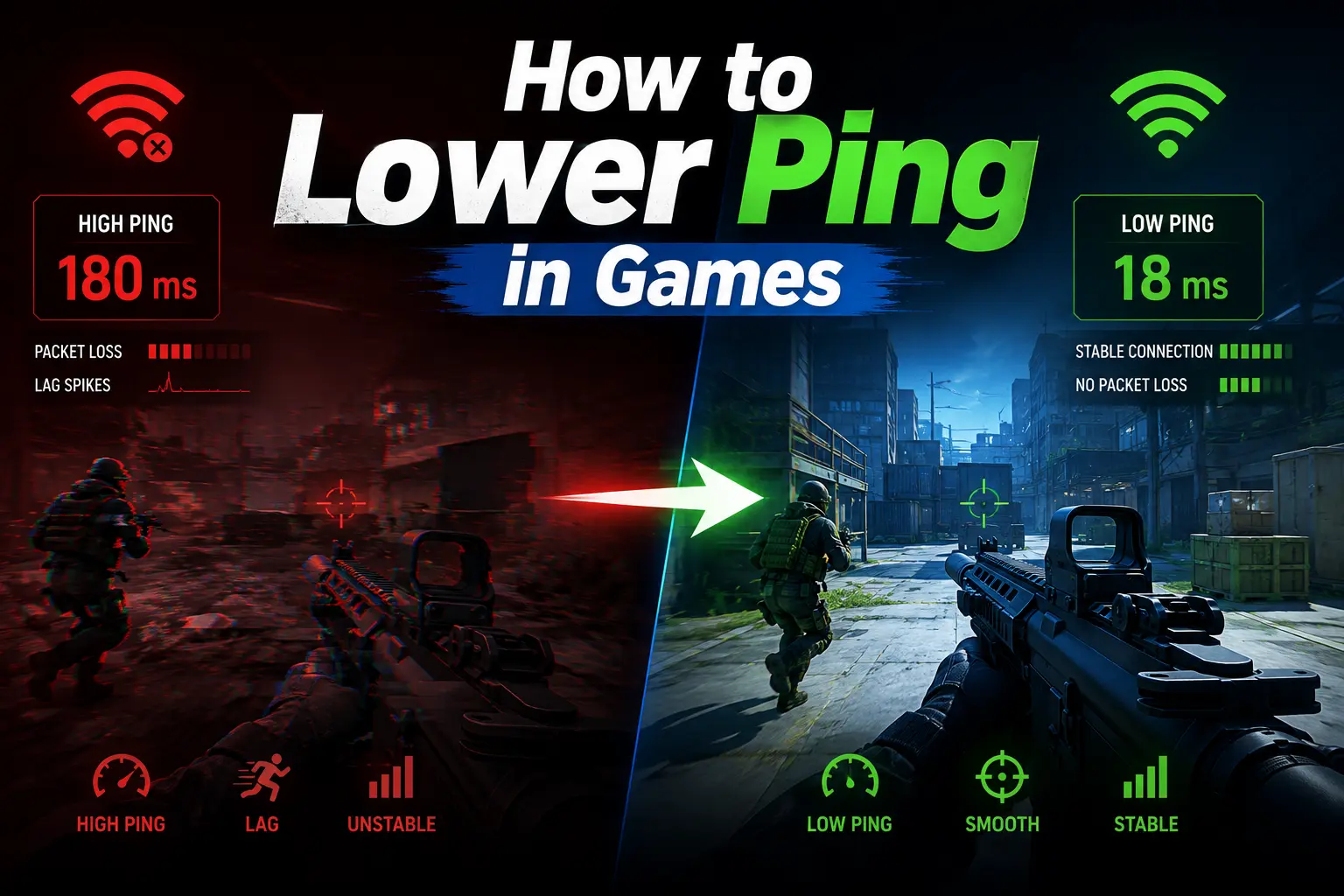
High ping can turn an intense multiplayer match into a frustrating experience filled with delayed inputs, rubber-banding, and missed opportunities. Whether you play competitive shooters, battle royales, or MMOs, latency often decides the outcome more than raw skill. The good news is that most high-ping problems stem from how to lower ping in games in controllable factors in your home network, device setup, or game settings rather than an unfixable internet connection.
This guide draws on widely tested approaches used by gamers and network experts. It focuses on practical, low-cost or free steps that deliver measurable improvements before considering hardware upgrades or service changes. Results vary by location, internet provider, and game, but consistent application of these methods routinely drops latency by 10–50 milliseconds or more for many players.
Understanding Ping and Its Impact
Ping measures the round-trip time in milliseconds for data to travel from your device to the game server and back. Lower values mean actions register faster. Under 20 ms feels nearly instantaneous for competitive play. 20–50 ms remains excellent for most titles. 50–100 ms is playable for casual sessions, while anything above 100 ms introduces noticeable lag, especially in fast-paced games.
High ping usually results from physical distance to servers, wireless interference, network congestion from other devices or downloads, outdated equipment, or inefficient routing by your internet provider. Download speed alone rarely determines latency; stability and path quality matter more and solve how to lower ping in games.
Switch to a Wired Ethernet Connection
The single most effective change for the majority of players is abandoning Wi-Fi. Wireless signals face interference from walls, appliances, neighboring networks, and distance, which adds both latency and jitter (variable lag spikes).
Connect your PC or console directly to the router with a Cat5e or Cat6 Ethernet cable. Many users report drops of 10–30 ms or higher simply by making this switch on the same internet plan. If running a long cable is impractical, powerline adapters that use existing electrical wiring or MoCA adapters over coaxial cable often outperform pure Wi-Fi for gaming stability.
When Wi-Fi remains necessary, use the 5 GHz or 6 GHz band instead of the crowded 2.4 GHz band. Position your device closer to the router, minimize obstacles, and select the least congested channel with a free Wi-Fi analyzer app.
Select the Closest Game Server
Distance creates unavoidable delay because data cannot travel faster than the laws of physics allow. Always choose the server region nearest to your physical location when the game offers manual selection. Playing on a distant continent can add 50–100 ms or more baseline latency.
Check in-game settings for region options. Games such as Valorant, Fortnite, Counter-Strike 2, and many others allow explicit region choice. Avoid auto-selection if it consistently places you far away. If friends play in another region, accept the trade-off or coordinate on a compromise server.
Eliminate Bandwidth Competition
Background processes steal bandwidth and create congestion that spikes ping. Close unnecessary browser tabs, streaming apps, cloud sync tools (OneDrive, Dropbox, Google Drive), and game launchers that download updates. Pause Windows Update or set it to notify rather than download automatically. Use Task Manager on Windows or Activity Monitor on macOS to end high-network processes before launching a game.
In a shared household, ask others to avoid large downloads or 4K streaming during your sessions. Disconnect unused smart devices temporarily if possible. These steps alone frequently stabilize connection and reduce average latency by 5–20 ms.
Optimize Your Router Settings
Restart your modem and router regularly. Devices left powered on for weeks accumulate temporary glitches that degrade performance. A simple power cycle often restores better routing tables and clears memory issues.
Enable Quality of Service (QoS) if your router supports it. This feature prioritizes gaming traffic or specific devices so game packets move ahead of other data. Look for QoS, Adaptive QoS, or Smart Queue Management (SQM) in the router admin panel (usually accessed via 192.168.1.1 or similar). Assign your gaming device top priority. Properly configured QoS shines during peak household usage and can cut spikes significantly.
Update router firmware through the manufacturer’s interface and keep network adapter drivers current via Device Manager or the hardware maker’s site. Outdated software occasionally introduces unnecessary latency.
Additional Network Improvements
Flush your DNS cache and consider switching to reliable public DNS servers such as Google (8.8.8.8) or Cloudflare (1.1.1.1). While this more often speeds up page loading than pure in-game ping, it can improve overall responsiveness.
Limit the number of connected devices during play. Test your connection with a speed test that reports latency, and run continuous pings to a stable address while gaming to identify whether spikes originate locally or further along the path.
If your provider’s routing to game servers is inefficient, a gaming-oriented VPN sometimes finds a better path and lowers ping. However, most standard VPNs add overhead and increase latency. Test carefully and only keep the connection if measurements improve. Avoid VPNs primarily marketed for privacy if low ping is the main goal.
When Hardware or Service Upgrades Make Sense
If free and low-cost fixes plateau, examine your internet type. Fiber connections generally deliver the lowest and most consistent latency. Cable is usually solid, while older DSL, fixed wireless, or satellite often struggle. Contact your provider about available plans or report persistent high latency with traceroute data showing where delays occur.
A modern router with strong QoS and multi-gigabit capability helps in busy homes. Gaming-specific models sometimes include extra prioritization features, though a well-configured standard router often suffices.
Realistic Expectations and Ongoing Maintenance
No method guarantees sub-20 ms how to lower ping in games, ping everywhere. Geography and server locations set hard limits. Focus first on eliminating local sources of lag—wired connection, closest server, closed background apps, and QoS—because these deliver the largest, most reliable gains for the least effort.
Test changes one at a time and measure results both with external tools and the in-game ping display. What works for one title or household may need slight adjustment for another. Consistent application of these steps turns high-ping frustration into smoother, more competitive sessions for most players, this make your problem solve of how to lower ping in games.