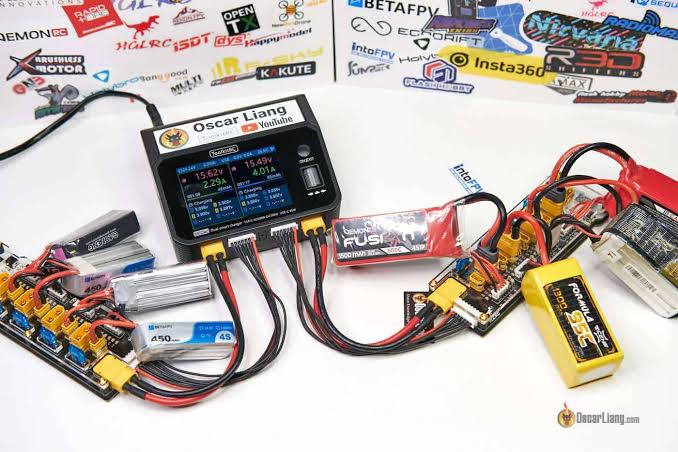
Choosing the best rc battery chargers is one of the most important decisions for anyone running cars, trucks, boats, airplanes, or FPV drones. A quality charger does far more than simply refill a pack—it balances cells, protects against overcharge, supports proper storage voltages, and helps extend battery life. In 2026, the market offers excellent options across power levels and price points, with dual-channel AC/DC models leading for most hobbyists.
Why the Right RC Battery Charger Matters
LiPo and LiHV batteries deliver high power but require precise voltage control per cell. Charging without a proper balance charger risks cell imbalance, reduced capacity, or in extreme cases thermal runaway. NiMH packs are more forgiving yet still benefit from proper peak detection and temperature monitoring. A good charger handles multiple chemistries, offers adjustable current, and includes safety cutoffs. Investing in a reliable unit pays off through longer battery life, consistent performance at the track or field, and greater peace of mind.
Key Features to Consider When Buying
Most modern units support 1–6S lithium packs and higher cell counts for NiMH. Storage mode is essential for LiPo—bringing cells to approximately 3.8V per cell for safe long-term storage.
Power Output and Channels
Single-port chargers work well for beginners or small fleets. Dual-channel models let you charge two packs simultaneously, dramatically cutting downtime. AC input provides convenience at home; DC input unlocks higher power in the field when paired with a suitable power supply. Aim for at least 100–200W for everyday 2S–4S packs and higher (300W+) if you run larger capacity or higher cell-count batteries.
Safety Protections
Essential features include overcharge, over-current, short-circuit, reverse-polarity, and temperature protection. Clear displays showing individual cell voltages, charge current, and elapsed time help monitor the process. Built-in cooling fans and solid construction matter for sustained high-power use.
Top Recommended RC Battery Chargers
Hota D6 Pro – Best Overall Dual-Channel Option
The Hota D6 Pro consistently ranks among the top choices for RC and FPV users. It offers dual independent channels delivering up to 325W each (650W total) on DC input and 200W total on AC with power distribution. Maximum current reaches 15A per channel. It supports LiPo, LiHV, LiFe, Li-Ion (1–6S), NiMH/NiCd (1–16S), and lead-acid. A clear color screen, storage mode, balance charging, and external discharge capacity.
Gens Ace iMars D300 – Best Smart Dual Charger
The iMars D300 (and Plus variants) delivers strong dual-channel performance with AC 300W or DC up to 700W (350W per channel). Charge current reaches 16A per channel. It supports LiPo, LiHV, LiFe (1–6S) and NiMH (1–16S). G-Tech smart recognition automatically detects compatible Gens Ace batteries and sets optimal parameters, while still handling standard packs. Modes include charge, discharge, balance, storage, sync charging, and power supply. The IPS display is clear, and safety features are comprehensive. This unit suits users who want higher AC power and smart convenience in a portable package.
ISDT Q6 Pro – Best Compact Single-Port Choice
For those who prefer a streamlined single-port solution or operate on a tighter budget, the ISDT Q6 Pro (and related Plus/Nano variants) remains highly regarded. It delivers strong power for its size (up to around 300W DC in Pro versions), supports multiple chemistries including LiPo and NiMH up to 6S, and features an intuitive interface with precise balancing. Compact and lightweight, it is ideal for field use or smaller setups. Many enthusiasts start here and later add dual-channel units as their battery collection grows.
Budget-Friendly Options
Entry-level users can consider genuine SkyRC IMAX B6AC-style chargers or similar multi-chemistry AC/DC units in the 50–100W range. These handle basic LiPo and NiMH needs with balance charging and storage modes. Avoid no-name clones that lack accurate balancing or proper safety circuits.
How to Choose the Best RC Battery Charger for Your Needs
Match the charger to your typical battery sizes and usage. Casual drivers with a few 2S–3S packs can start with a solid single-port or modest dual-channel AC model. Frequent racers or those with multiple vehicles benefit from dual channels and higher wattage. Confirm connector compatibility (XT60 is common) or plan for adapters. Check whether you need pure AC convenience or the higher power of DC field charging. Read recent user feedback on cooling, screen readability, and firmware support. Buy from reputable sellers to avoid counterfeits.
Essential Safety Practices for RC Battery Charging
Always use a fire-resistant LiPo bag or charging container. Never leave charging batteries unattended. Inspect packs for puffing, damage, or damaged leads before charging. Charge at 1C (matching capacity in amps, e.g., 5A for a 5000mAh pack) unless the battery is rated for higher rates. Use storage mode for packs not used within a few days. Keep a fire extinguisher rated for lithium fires nearby and charge on a non-flammable surface. Proper habits protect both your investment and your workshop.
Final Thoughts
The best RC battery chargers in 2026 combine accurate balancing, multi-chemistry support, solid power delivery, and robust safety features. The Hota D6 Pro stands out for most users seeking dual-channel versatility and reliability. The Gens Ace iMars D300 appeals to those wanting higher AC power and smart features, while the ISDT Q6 Pro remains an excellent compact choice. Pair any quality charger with safe charging practices and you will enjoy longer battery life, consistent performance, and more time enjoying the hobby. Choose based on your fleet size, power needs, and budget, and upgrade when your collection outgrows the current setup.


One thought on “Best RC Battery Chargers for Reliable Performance and Safety in 2026”