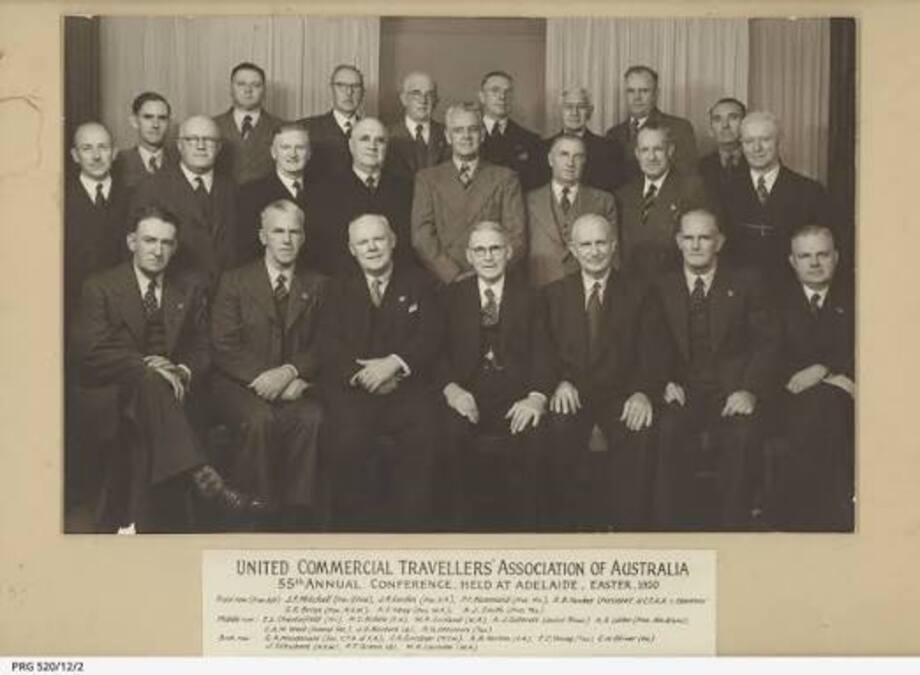
The Commercial Travelers Association stands as one of Australia’s most significant mutual benefit organizations for traveling salespeople. Often abbreviated as CTA, the Commercial Travelers Association supported the men—and later women—who carried goods, orders, and commercial connections across vast distances for more than a century. Understanding the Commercial Travelers Association offers valuable insight into how Australia’s retail and wholesale networks developed and how professional associations once shaped working life on the road.
Origins of the Commercial Travelers Association
Commercial travelers, also known as traveling salesmen or agents for manufacturers and wholesalers, played a vital role in colonial and early federation Australia. They journeyed by train, horse and buggy, steamer, and later motor vehicle to solicit orders from retailers in regional towns and remote settlements. Conditions were often harsh: unreliable transport, inconsistent accommodation, and limited protections.
The earliest formal groups emerged in the mid-19th century. In Adelaide, commercial travelers organized in 1866, leading to the incorporation of the Commercial Travelers Association of South Australia in 1874—the first such body in Australia. Melbourne followed with the Commercial Travelers Association of Victoria, formally established in 1880 at a meeting of around 40 travelers. New South Wales formed its association in 1883, Queensland in 1884, Western Australia in 1896, and Tasmania in 1900.
In 1895 these state bodies came together as the United Commercial Travelers Association of Australasia (later of Australia). This national organization coordinated advocacy, benefits, and publications while allowing state chapters to maintain local clubs and services. The Commercial Travelers Association quickly became a respected mutual society rather than a traditional trade union, focusing on practical support for members.
Core Purpose and Member Benefits
The primary aims of the Commercial Travelers Association centered on improving conditions for those “on the road.” Members received identification badges, negotiated discounted hotel rates and travel concessions, and gained access to recommended accommodation lists that helped avoid substandard lodgings. Insurance schemes covering sickness, accident, and mortality provided a financial safety net for travelers and their families—benefits that were innovative for the era.
Clubs formed an essential part of the association’s offering. Purpose-built clubhouses in major cities offered affordable rooms, dining, meeting spaces, and social facilities. In Melbourne, the association occupied a notable Edwardian Baroque building on Flanders Street designed by architects H.W. and F.B. Tompkins. In Sydney, the Commercial Travelers Association of New South Wales acquired land in Martin Place and later commissioned a distinctive Harry Idler-designed building. These venues served as hubs for networking, displaying samples, and fostering camaraderie among members who spent long periods away from home.
The association also published journals such as The Australian Traveler and the annual Australia Today, which featured high-quality artwork by artists including Norman Lindsay. These publications promoted Australian industry, tourism, and national development while keeping members informed.
Beyond individual benefits, the Commercial Travelers Association acted as an influential lobby group. It advocated for better roads, standardized railway gauges, improved postal and telephone services, and higher hotel standards. Members saw themselves as nation-builders who helped extend commerce into regional Australia.
Peak Influence and Community Role
Membership peaked in the mid-20th century. Victorian numbers exceeded 8,000 in the early 1950s, while New South Wales reached around 14,000 in 1939. Clubs became popular gathering places not only for travelers but also for politicians, judges, and business leaders. During World War II, the Sydney club hosted high-level discussions, including meetings involving wartime leaders.
The association maintained a strong charitable tradition. Chapters organized children’s picnics, supported war efforts (including donations of aircraft), and later distributed substantial funds to community causes. When the Victorian branch wound up operations, it donated more than $500,000 to organizations including The Smith Family, the Fred Hollows Foundation, and cancer research institutes.
Decline and Enduring Legacy
Post-war economic and technological changes gradually reduced the need for traditional commercial travelers. Improved road networks, better communications, changing retail models, and the rise of direct sales and digital ordering diminished the classic “man on the road” role. Membership declined through the 1960s and 1970s. Clubhouses closed or were sold, and the national United Commercial Travelers Association of Australia was wound up in 2014 along with the Victorian chapter.
Yet the story did not end completely. The Commercial Travelers Association of New South Wales continues today as the CTA Business Club in Sydney, offering facilities, reciprocal memberships, and a professional networking environment. South Australian activities have also persisted in adapted form. These modern iterations retain the original spirit of mutual support and professional connection while serving contemporary business executives.
Why the Commercial Travelers Association Matters Today
The history of the Commercial Travelers Association illustrates how professional associations can improve working conditions, build social capital, and contribute to national infrastructure. It documents a distinctive occupation that linked manufacturers to distant markets and helped shape Australia’s commercial landscape. Heritage-listed buildings and archival collections—such as those held by the University of Melbourne—preserve the records, publications, and artifacts of this once-powerful organization.
For researchers, business historians, and anyone interested in Australian commerce, the Commercial Travelers Association remains a compelling case study. It shows the value of collective action among mobile workers and the lasting impact of mutual benefit societies. Although the classic commercial traveler has largely given way to modern sales and logistics roles, the association’s legacy of support, advocacy, and community contribution continues to resonate.
In an era of remote work and digital platforms, the experience of the Commercial Travelers Association reminds us that professional networks and practical benefits still matter. Its story is not merely historical; it offers lessons in adaptability, mutual aid, and the quiet but essential work of connecting markets across a continent.



2 thoughts on “Commercial Travellers Association: Legacy & Impact Explained”