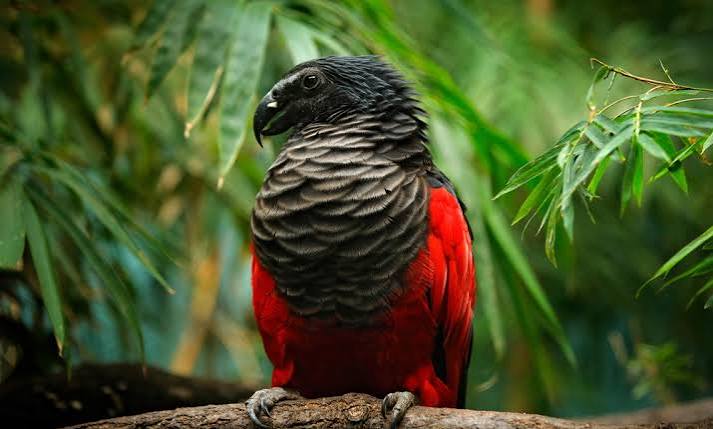
The Dracula parrot, scientifically known as Psittrichas fulgidus, ranks among the most distinctive birds in the world. People also call it Pesquet’s parrot or the vulturine parrot. This species draws attention from bird enthusiasts and researchers with its bold black-and-red plumage and unusual look. It lives only on the island of New Guinea. There it thrives in remote hill and montane rainforests. The Dracula parrot shows clear evolutionary adaptation, specialized feeding habits, and the challenges of modern conservation. It does not drink blood, despite its dramatic nickname.
Distinctive Appearance and Physical Traits
The Dracula parrot looks more like a figure from gothic stories than a typical parrot at first glance. Adults grow to about 46 centimeters (18 inches) long. They weigh between 600 and 800 grams. Their feathers appear mostly black or dark gray. Bright scarlet red covers the belly, lower underparts, uppertail coverts, and wing panels. Grayish scaling marks the chest and adds subtle texture.
One standout feature is the bare facial skin and relatively small-looking head. A long, strongly hooked bill adds to the vulture-like profile. This bare-headed trait serves a practical purpose. It stops sticky fruit pulp from matting the feathers during meals. Adult males show a small red patch behind each eye. Females lack this mark. Young birds look like adults but display duller red tones.
These physical traits make the species easy to recognize. They also explain the popular “Dracula” name. Dark plumage and vivid red accents create a cape-like effect. The bare head and hooked beak complete the dramatic look. Yet the bird remains a peaceful fruit-eater with no predatory habits.
Habitat and Geographic Range
The Dracula parrot lives only on the island of New Guinea. Its range covers both Papua New Guinea and the Indonesian province of Papua. It prefers primary and tall secondary forests in the foothills and lower mountains. Most birds stay at elevations from 500 to 2,000 meters (about 1,640 to 6,562 feet). Some individuals move into lowland areas as low as 30 meters when food grows scarce.
These humid, cloud-covered forests supply the dense canopy and fruiting trees the species needs. The birds move somewhat nomadically within their range. They follow the seasonal ripening of preferred figs. Observers usually find them in pairs or small groups of up to 20 birds. They fly with rapid wingbeats broken by short glides.
Specialized Diet and Feeding Behaviour
Most parrots eat a mix of seeds, nuts, and insects. The Dracula parrot follows a much narrower diet. It specializes almost entirely on the soft pulp of a few fig species. Common choices include Ficus sterrocarpa and Ficus hesperidiformis. Birds sometimes take mangoes, flowers, or nectar as extra food. They may also swallow fig wasps by accident while feeding.
This limited diet shapes nearly every part of the species’ life. The bare facial skin evolved as a clear response to sticky ripe figs. By reducing feathers around the face and bill, the parrot avoids constant soiling. It needs less preening after each meal. Keepers in captivity offer soft fruits of many kinds. In the wild, dependence on specific figs leaves the bird vulnerable to changes in fruiting cycles.
Vocalizations, Social Behaviour, and Breeding
The Dracula parrot produces harsh, rasping calls and drawn-out screeches. These sounds travel well through the dense forest canopy. They differ sharply from the melodic or chatter-like notes of many other parrots. The calls help birds stay in contact over long distances and keep groups together in thick vegetation.
Researchers still know little about breeding in the wild. Pairs nest in large hollow trees. They usually lay one or two eggs. Captive records give more details on incubation and fledging, but field data remain limited because of the remote and rugged terrain. Birds can live 20 to 40 years under good conditions. This long lifespan matches the slow reproductive rate seen in many large parrots.
Conservation Status and Ongoing Threats
The International Union for Conservation of Nature (IUCN) lists the Dracula parrot as Vulnerable. Estimates place the population between 20,000 and 50,000 mature individuals. Numbers appear to have declined moderately in recent decades. Hunting for the bird’s striking red and black feathers forms the main threat. Local people in parts of New Guinea use the feathers in traditional ceremonial dress. Habitat loss from logging and farming adds further pressure. Limited capture for the illegal pet trade also occurs.
The species appears on CITES Appendix II, which controls international trade. Much of its range stays relatively remote and away from dense human settlements. Still, hunting pressure can grow intense in certain areas. Conservation work centers on protecting habitat, educating communities about sustainable alternatives to feather use, and tracking remaining populations.
Why the Dracula Parrot Matters
The Dracula parrot offers more than striking looks. It represents a unique evolutionary line. As the only member of the genus Psittrichas and its own subfamily, it has no close living relatives among other parrots. Scientists study its specialized diet, body form, and behavior to learn how birds adapt to narrow ecological niches in tropical forests.
Birdwatchers and researchers count an encounter with this species as a memorable moment. Its gothic appearance, piercing calls, and limited range make it a clear symbol of New Guinea’s rich biodiversity. Protecting the Dracula parrot also shields the complex forest systems that support many other endemic plants and animals.
In a time of rapid environmental change, the Dracula parrot’s story highlights the value of careful, evidence-based conservation. People who understand its true nature—not as a mythical vampire but as a specialized fruit-eating parrot—can join scientists, local communities, and nature lovers. Together they can help this remarkable bird continue to fly through the misty mountains of New Guinea for generations ahead.



One thought on “Dracula Parrot: Pesquet’s Parrot of New Guinea”