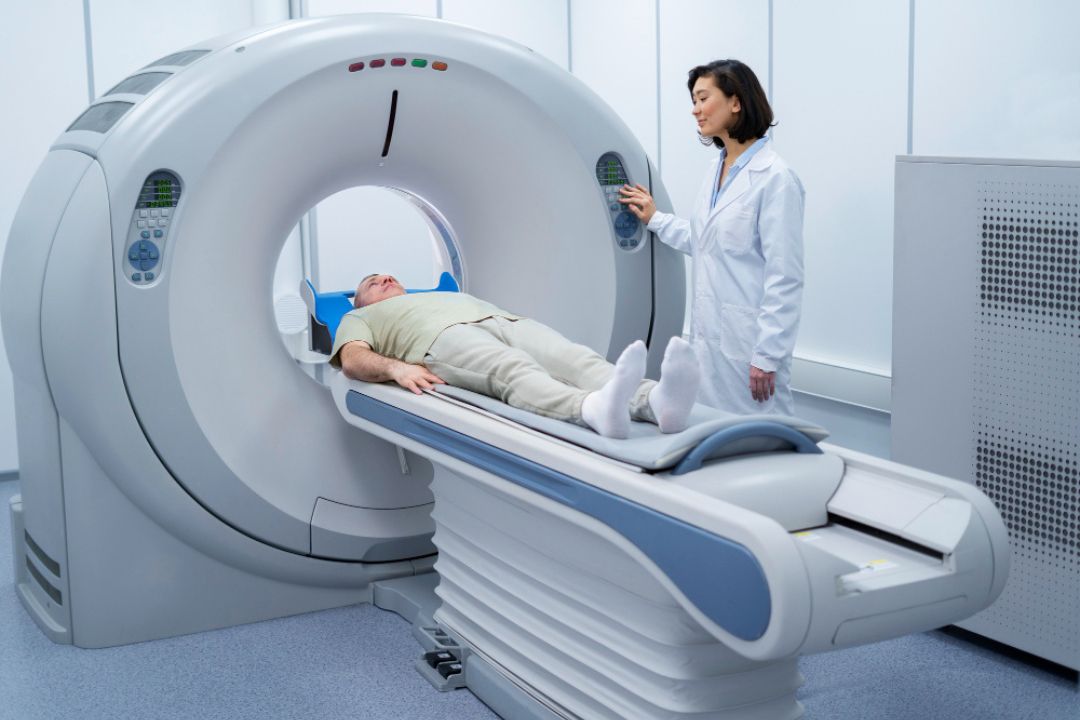
An Open MRI Machine offers a patient-friendly alternative to traditional enclosed scanners. Many people fear tight spaces during medical imaging. This design addresses that concern while still delivering useful diagnostic images. Doctors use it to examine soft tissues, organs, joints, and the spine without radiation.
Patients who feel anxious in closed tunnels often prefer this option. Larger individuals and children also benefit from the extra space. Modern versions improve image quality enough for many routine exams.
What Is an Open MRI Machine?
An Open MRI Machine uses the same core technology as other MRI systems. Strong magnets and radio waves create detailed pictures of the body’s interior. The key difference appears in the physical design.
Instead of a long narrow tube, the system features open sides or an open architecture. Magnets sit above and below the patient table. This leaves space on the sides so patients can see the room and feel less confined.
Field strength typically ranges from 0.2 Tesla to about 1.2 Tesla. Traditional closed systems often reach 1.5T or 3T. Lower field strength can mean slightly longer scan times or reduced detail in some cases. Advances in software and coils help close that gap for many clinical needs.
How Does an Open MRI Machine Work?
The process follows standard MRI principles. The machine generates a magnetic field that aligns hydrogen protons in the body. Radiofrequency pulses then disrupt this alignment. When the protons realign, they release signals.
A computer turns those signals into clear images. Technologists select sequences based on the body part under study. Patients lie still on the table while the system captures multiple views.
The open design does not change the physics. It mainly improves the experience. Some models use permanent magnets that need no liquid helium. Others incorporate advanced reconstruction techniques to boost signal quality.
Scan times usually last 15 to 60 minutes. Exact duration depends on the area imaged and whether contrast material is needed.
Key Benefits of an Open MRI Machine
Patient comfort stands out as the biggest advantage. The open sides reduce feelings of claustrophobia. Many people complete the exam without sedation.
Larger patients fit more easily. Weight limits often exceed those of standard closed systems. Children feel less intimidated and may hold a parent’s hand in some setups. Elderly patients or those with limited mobility also find access simpler.
Noise levels can be lower than in traditional tunnels. Reduced anxiety leads to less movement during the scan. Less movement often produces clearer images.
Doctors recommend this option for many musculoskeletal studies, spine evaluations, and general soft-tissue imaging. It works well when high-end neurological or cardiac detail is not essential.
Who Benefits Most?
- People with claustrophobia or anxiety
- Bariatric or larger-framed patients
- Pediatric patients
- Individuals with chronic pain who struggle to stay still in tight spaces
- Those needing accompaniment during the scan
Limitations Compared to Closed MRI Systems
Image quality remains the main trade-off. Higher-field closed systems (1.5T and 3T) generally deliver sharper resolution and faster scans. They suit complex brain imaging, fine joint details, or advanced applications better.
Open systems may require longer acquisition times to gather enough signal. Certain specialized techniques remain limited to higher-field machines.
Modern high-field open models (around 1.0T–1.2T) narrow the quality gap significantly. Software improvements and better coils help produce diagnostic images for a wide range of exams. Radiologists decide based on the clinical question.
Open MRI Machine vs Traditional Closed MRI
| Feature | Open MRI Machine | Traditional Closed MRI |
| Design | Open sides | Enclosed tunnel |
| Field Strength | Typically 0.2–1.2T | Usually 1.5–3T |
| Patient Comfort | High | Lower for some patients |
| Image Detail | Good for many exams | Excellent for complex cases |
| Scan Time | Often longer | Generally faster |
| Best For | Comfort-focused, routine scans | High-resolution needs |
Both systems remain safe and radiation-free. The choice depends on the patient’s needs and the required diagnostic detail.
What to Expect During the Procedure
Preparation stays simple. Wear comfortable clothes without metal. Remove jewelry, watches, and other metal objects. Inform the technologist about any implants, pacemakers, or prior metal exposure.
You lie on the table. The technologist positions you and may place a coil over the area of interest. The machine makes knocking or humming sounds during sequences. You can usually communicate through an intercom.
Most people tolerate the exam well in the open design. After the scan, you can resume normal activities unless sedation was used.
Frequently Asked Questions
Is an Open MRI Machine as accurate as a closed one?
Modern systems provide diagnostic quality for many conditions. High-field closed scanners still excel for the most detailed studies. Your doctor chooses based on the specific clinical need.
How long does a scan take?
Most exams last 15 to 45 minutes. Complex or multi-area studies may take longer.
Can I have an Open MRI if I am claustrophobic?
Yes. The open design greatly reduces anxiety for most patients. Sedation is rarely needed.
Are there any risks?
MRI uses no ionizing radiation. The main concerns involve metal implants or devices that may interact with the magnetic field. Screening ensures safety.
Who should avoid an Open MRI Machine?
Patients needing the highest possible resolution for certain brain, vascular, or intricate joint problems may require a higher-field closed system. Discuss options with your physician.
Does insurance cover Open MRI?
Most plans cover medically necessary MRI exams. Coverage details vary by provider and policy.
Conclusion
An Open MRI Machine prioritizes patient comfort without sacrificing the core value of magnetic resonance imaging. It helps claustrophobic individuals, larger patients, and children access important diagnostic information. While traditional high-field systems remain preferred for certain advanced applications, modern open designs deliver reliable results for a broad range of exams.Talk with your doctor about whether this option suits your situation. The right scanner improves both the experience and the diagnostic outcome.