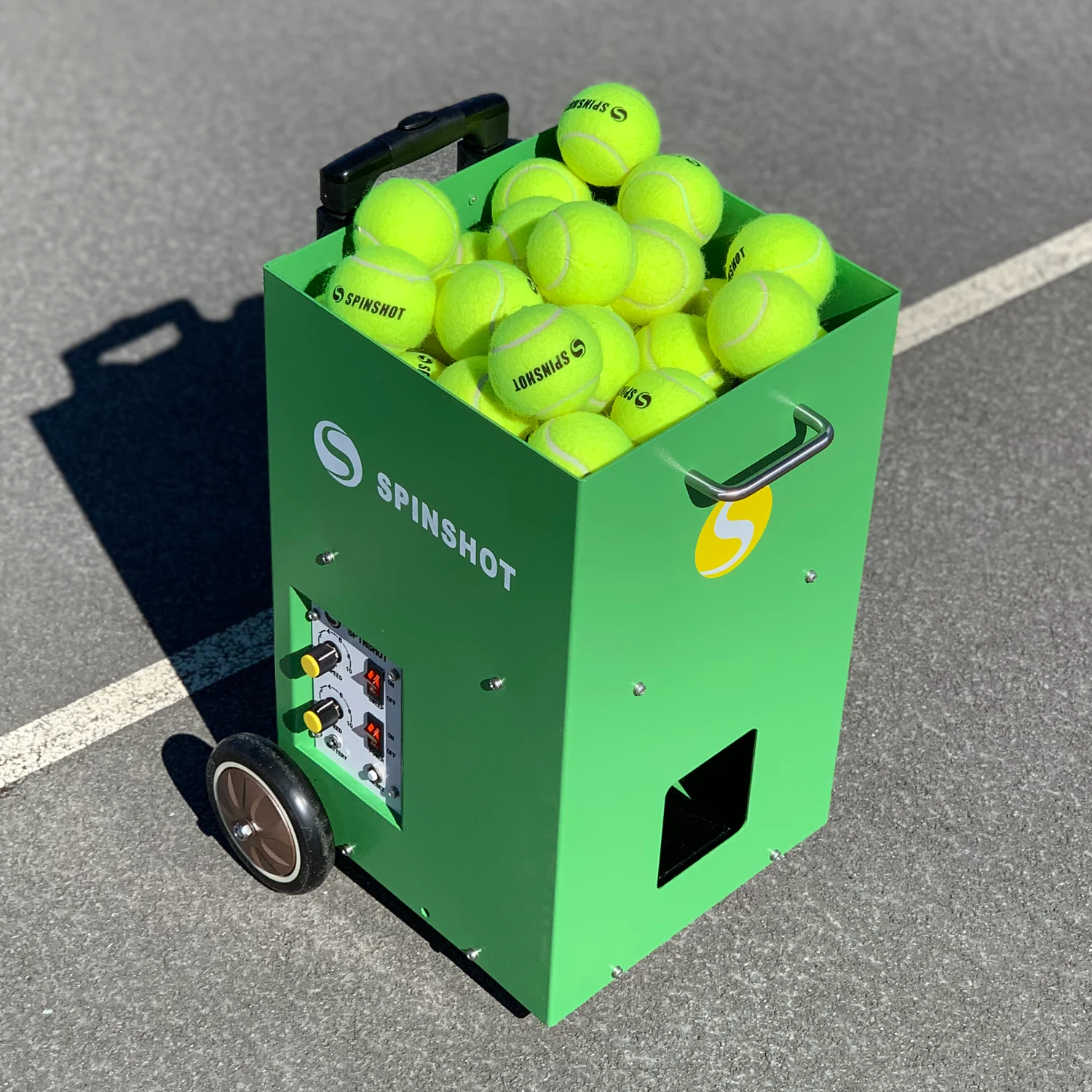
A tennis ball machine transforms solo practice by delivering consistent, adjustable feeds that help players of all levels refine strokes, footwork, and timing. Whether you train on a private court or at a club, this training tool removes the need for a hitting partner while allowing focused repetition. Modern machines offer spin control, oscillation, programmable drills, and long battery life, making them valuable for beginners building consistency and advanced players simulating match conditions.
Why Invest in a Tennis Ball Machine?
Consistent ball feeding builds muscle memory faster than irregular practice with a partner. You control the pace, placement, spin, and interval so every session targets specific weaknesses. Intermediate and advanced players use these machines for high-volume groundstroke work, approach-shot sequences, and recovery drills. Beginners benefit from slower, reliable feeds that build clean contact without the pressure of live play.
Research and coaching experience show that structured machine practice improves groundstroke consistency noticeably when used two or more times per week. The machine never tires, never misses a feed, and never judges your errors. This reliability lets you stay in a focused training zone longer than most partner sessions allow.
Key Features to Evaluate
Choosing the right model depends on matching features to your goals, court access, and budget. Focus on the elements that affect real practice quality rather than marketing claims.
Ball Capacity and Feed Rate
Capacity determines how long you can hit before stopping to collect balls. Most solid machines hold 100–150 balls. At a four-second interval, 150 balls provide roughly ten minutes of continuous work. Lower-capacity units force more frequent interruptions and break training rhythm. Adjustable feed rates let you slow the pace for technique work or speed it up for reaction drills.
Speed and Spin Options
Useful speed ranges typically run from about 20–30 mph for beginners up to 70–80 mph for advanced players. Topspin and backspin (underspin) settings create realistic bounce patterns. Flat feeds alone feel artificial. Look for independent control of spin intensity so you can practice heavy topspin forehands or low-bouncing slice backhands.
Oscillation and Placement
Basic machines offer simple left-right oscillation. Better units provide two-line feeds, random patterns, or fully programmable placement across the court. Programmable models allow sequences such as wide ball followed by a recovery shot to the center. This variety develops footwork and decision-making far more effectively than fixed-position feeds.
Portability, Battery, and Controls
Weight and size matter if you transport the machine yourself. Many popular models fall between 25 and 45 pounds and include wheels or folding designs. Battery life of three to six hours supports full sessions without interruption. App-based controls and physical remotes let you change settings without walking to the machine each time. Some newer units add voice commands or wearable integration for even smoother sessions.
Durability and Warranty
Club-grade machines emphasize robust construction and longer warranties (often two to three years). Residential models balance features with lighter weight and lower cost. Check battery type, as lithium packs generally outperform older lead-acid designs in weight and longevity.
Matching a Tennis Ball Machine to Your Level
Beginners should prioritize consistent low-to-moderate speeds, simple controls, and reliable feed intervals. A machine that starts under 25–30 mph and offers basic topspin helps develop clean contact and timing.
Intermediate players gain the most from horizontal oscillation, adjustable spin, and moderate programmability. These features support alternating forehand-backhand drills and recovery patterns.
Advanced players and coaches benefit from high-speed capability, full spin range, multi-shot sequences, and larger hoppers. Some premium units even move on the court to create more realistic movement patterns.
Coaches and clubs usually need higher capacity, long runtime, durable builds, and easy multi-user operation.
Practical Tips for Effective Practice
Start every session with a clear goal. Decide whether you will work on consistency, depth, spin production, or movement. Set the machine to deliver the exact ball you need and stay focused for short, high-quality blocks rather than endless random hitting.
Combine machine work with footwork drills. After each shot, recover to a neutral ready position before the next ball arrives. This habit transfers directly to match play.
Vary the feed occasionally. Even the best programmed sequence becomes predictable if you never change it. Mix in random oscillation or manual adjustments to keep concentration high.
Maintain the equipment. Clean the wheels and launch mechanism, store the machine properly, and follow battery care guidelines. Well-maintained machines deliver more consistent feeds over years of use.
Common Mistakes to Avoid
Buying purely on maximum speed often leads to frustration. Many players never use the highest setting because the ball flies long or the feed becomes too fast for quality technique work. Match the usable range to your current level.
Ignoring spin leaves practice less realistic. Flat balls bounce differently from the heavy topspin and slice you face in matches.
Underestimating setup and collection time reduces enjoyment. Choose a capacity and portability level that fits how and where you train.
Relying only on the machine limits development. Pair machine sessions with live hitting, match play, and coaching for complete improvement.
Frequently Asked Questions
Is a tennis ball machine worth the investment?
Yes for players who practice alone at least twice a week. The ability to control every variable and accumulate high-quality repetitions often pays for itself through faster improvement and reduced dependence on partners.
How much should I expect to spend?
Entry-level portable models start in the lower hundreds. Reliable mid-range machines with good spin and oscillation typically fall between $800 and $1,800. Premium programmable or mobile units can exceed $2,000.
Can beginners use a tennis ball machine effectively?
Absolutely. Start with slower speeds and longer intervals. Focus on clean contact and simple patterns before adding pace or complexity.
Do I need app control?
Not necessarily. Knob or remote controls work well for most players. App features become valuable when you want to save custom drills or change settings quickly from a distance.
How long do batteries usually last?
Quality lithium batteries commonly deliver three to six hours of continuous use depending on speed, spin, and feed rate settings. Real-world performance varies with age and temperature.
Conclusion
A well-chosen tennis ball machine accelerates skill development by providing unlimited, precise practice opportunities. Focus on capacity, usable speed and spin range, oscillation quality, portability, and battery life when comparing options. Match the features to your current level and training frequency rather than chasing the highest specifications. Consistent, purposeful sessions with the right machine build cleaner strokes, better footwork, and greater confidence on court. Combine this tool with live play and smart recovery, and you will see measurable progress in your game.
Discomfort frequently travels down the back of the forearm toward the wrist or hand. Simple actions such as turning a doorknob, shaking hands, or lifting a coffee cup can trigger it. Nighttime pain sometimes disturbs sleep.
Weak Grip Strength
Many people notice reduced ability to hold objects firmly. Writing, typing, or carrying bags becomes harder. The weakness comes from pain inhibition and actual tendon irritation rather than true muscle loss in early stages.
Stiffness and Limited Motion
The elbow may feel stiff, especially in the morning or after periods of rest. Full extension or flexion can cause increased discomfort. Swelling is usually mild or absent, though the area can feel warm or tender to the touch.
Pain with Specific Movements
Resisted wrist extension (bending the wrist backward against resistance) and lifting the middle finger against resistance often reproduce the pain. These clinical signs help confirm the diagnosis.
Symptoms typically worsen with activity and improve with rest. Ignoring early tennis arm symptoms allows the condition to become chronic and harder to resolve.
How Tennis Arm Differs from Similar Conditions
Golfers’ elbow (medial epicondylitis) produces pain on the inner side of the elbow rather than the outer side. Cubital tunnel syndrome or radial tunnel syndrome may cause numbness or tingling, which pure tennis arm usually lacks. Arthritis or referred pain from the neck can mimic the problem. A healthcare professional can distinguish these conditions through history and examination.
When to See a Doctor
Seek medical advice if:
- Pain persists beyond a few weeks of rest and activity modification
- Grip strength continues to decline
- Everyday tasks become difficult
- You notice redness, significant swelling, or inability to move the arm
- Night pain regularly interrupts sleep
Early evaluation improves treatment options. Diagnosis is mainly clinical. Imaging such as ultrasound or MRI is reserved for unclear cases or when other problems are suspected.
Managing and Relieving Symptoms
Most people improve with conservative care. Rest from aggravating activities forms the foundation. Avoid repeated gripping, heavy lifting, and forceful wrist extension for several weeks.
Ice applied for 15–20 minutes several times a day reduces local irritation. Over-the-counter anti-inflammatory medication can help short-term pain control when appropriate. A counterforce brace or strap worn just below the elbow often decreases tendon load during necessary activities.
Physical therapy focuses on gentle stretching of the forearm extensors and progressive strengthening once acute pain settles. Eccentric exercises (slow lengthening of the muscle under load) show particular benefit for tendon healing. A therapist can also address posture, workstation setup, or technique in sport or work to prevent recurrence.
In stubborn cases lasting many months, a clinician may discuss corticosteroid injections, platelet-rich plasma, or other options. Surgery remains rare and is considered only after prolonged non-surgical treatment fails.
Prevention Tips
You can lower the risk of developing tennis arm symptoms by:
- Using proper technique and equipment in sports or manual tasks
- Taking frequent breaks during repetitive work
- Strengthening forearm and shoulder muscles gradually
- Maintaining good posture at a desk
- Warming up before activity and stretching afterward
- Choosing tools with larger, cushioned grips when possible
Listen to early warning signs such as mild ache after activity. Addressing them promptly keeps minor irritation from becoming full tennis arm symptoms.
Frequently Asked Questions
Can you get tennis arm symptoms without playing tennis?
Yes. The name is historical. Most cases arise from occupational or daily repetitive tasks rather than tennis itself.
How long do tennis arm symptoms last?
Mild cases often improve within a few weeks to three months with proper rest and care. More established problems can take six to twelve months or longer to resolve fully.
Is heat or ice better for tennis arm symptoms?
Ice is preferred in the early painful phase to calm irritation. Heat may feel comforting later during rehabilitation when stiffness is the main issue.
Will tennis arm symptoms go away on their own?
Some mild episodes settle with simple activity changes. Persistent or worsening symptoms usually need structured management to avoid chronic problems.
Can both elbows develop tennis arm symptoms?
Yes, although the dominant arm is more commonly affected. Bilateral involvement occurs in a minority of people.
Conclusion
Understanding tennis arm symptoms empowers you to act early and protect long-term elbow function. Outer elbow pain, weakened grip, and discomfort with twisting or lifting motions are the main warning signs. Most cases respond well to rest, activity modification, bracing, and guided exercise. Persistent symptoms warrant professional assessment to rule out other conditions and guide recovery. By recognizing the problem promptly and making sensible adjustments to work or sport habits, you can reduce downtime and return to the activities you enjoy with greater confidence and less pain.