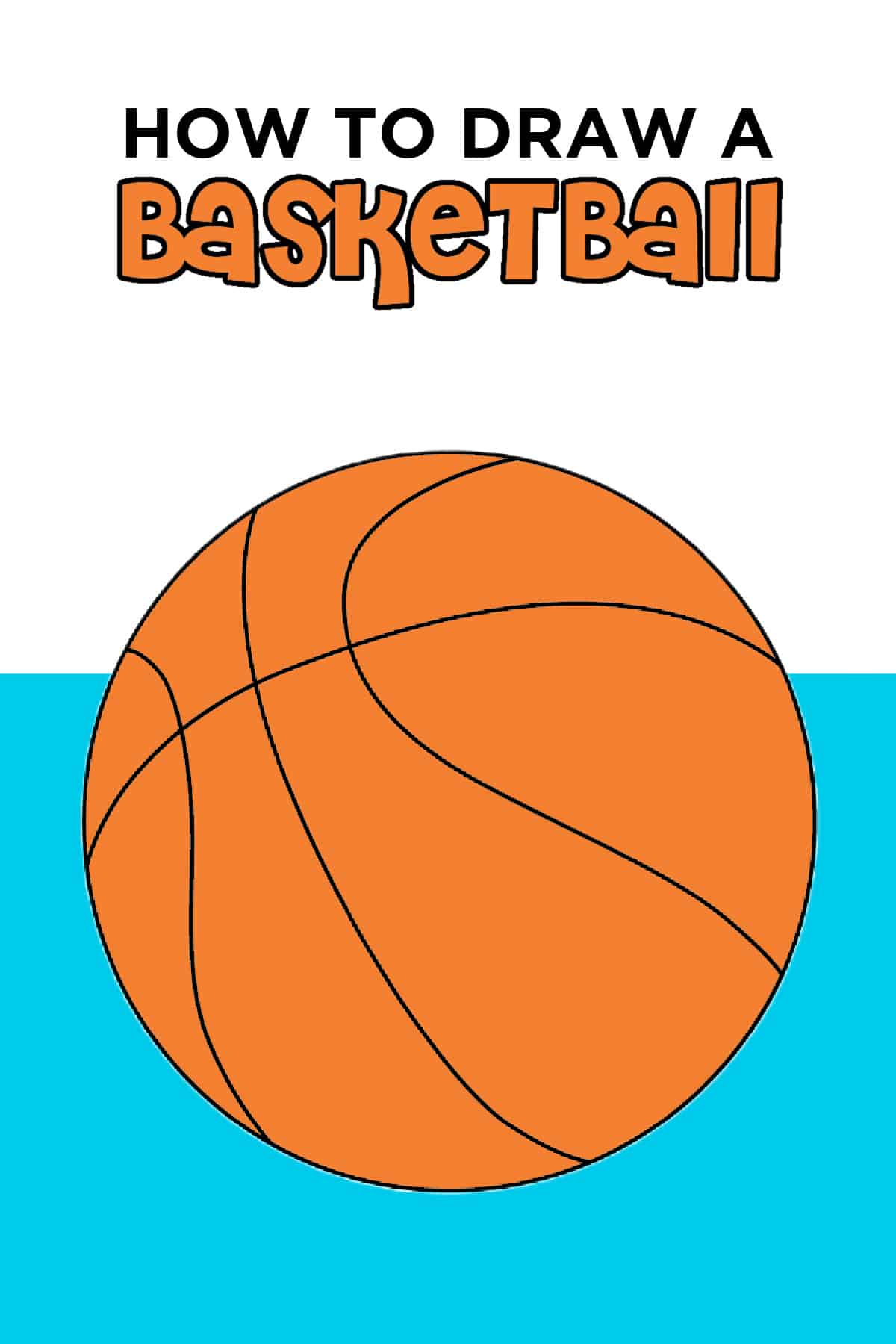
Basketball is a sport defined by explosive movement, precise geometry, and raw human intensity. Translating that energy onto paper or a digital canvas requires more than tracing a round ball and some stick figures. Effective basketball drawing demands observation, anatomical understanding, and deliberate artistic choices that convey speed, balance, and emotion. Whether you are a beginner sketching for fun or an illustrator creating sports-themed work, developing a solid approach to basketball drawing elevates ordinary lines into dynamic storytelling.
The foundation of strong basketball drawing begins with studying real athletes. Spend time watching game footage in slow motion or reviewing still photographs from professional matches. Notice how a player’s body shifts weight during a crossover dribble, how the shoulders rotate on a jump shot, and how the legs coil before a leap. These observations build the experience that separates stiff drawings from believable ones. Artists who regularly observe live or recorded games develop an intuitive sense of timing and force that no textbook can fully replace.
Understanding basic human proportions remains essential. The average adult figure is roughly seven to eight heads tall. In basketball, players often appear elongated because of their height and the dramatic foreshortening that occurs when limbs project toward or away from the viewer. When drawing a player driving to the basket, the extended arm and ball can dominate the composition while the trailing leg compresses. Practice constructing figures with simple shapes—ovals for the head and torso, cylinders for limbs—before refining muscle groups and clothing folds. This structural method prevents the common mistake of floating limbs or unbalanced stances.
Capturing motion is the heart of basketball drawing. Static poses rarely communicate the sport’s energy. Instead, use gesture lines to establish the primary direction of movement. A single sweeping curve from the back foot through the torso and into the shooting arm can define an entire jump shot. Overlapping action, such as a trailing arm or flying hair, reinforces the sense of speed. Clothing and equipment also participate in the motion: jersey fabric stretches across the chest during a stretch, shorts billow, and the ball itself can be drawn with motion blur or multiple ghosted positions to suggest rapid dribbling.
Lighting and shadow deepen the three-dimensional quality of basketball drawings. Arena lights create strong contrasts—bright highlights on the forehead, shoulders, and ball, with deep shadows under the chin, arms, and legs. Cross-hatching or soft digital gradients can model these volumes. Pay special attention to the basketball itself. Its surface is not a perfect sphere of uniform tone; the seams, pebbled texture, and specular highlights give it tactile presence. Rendering the ball convincingly anchors the entire composition and signals the artist’s attention to detail.
Composition decisions determine whether a drawing feels cinematic or merely descriptive. Place the main action off-center using the rule of thirds so the eye travels across the page. Negative space around a leaping player can emphasize height and isolation. Including background elements—court lines, a blurred crowd, or the rim and net—grounds the figure in a recognizable setting without overwhelming the focal point. For sequential storytelling, consider a series of small panels that show the progression of a play: the gather, the release, the follow-through.
Digital tools have expanded the possibilities for basketball drawing while traditional media retain their own strengths. Many artists begin with pencil or charcoal for quick gesture studies, then scan the work and refine it in software. Layers allow separate treatment of the figure, the ball, and the environment. Pressure-sensitive tablets make it easier to vary line weight—thicker lines on the leading edge of a limb, thinner ones on the trailing side—to reinforce directionality. Regardless of medium, the underlying principles of observation and structure remain unchanged.
Developing personal style within basketball drawing often means deciding how much realism to pursue. Some artists favor highly detailed anatomical accuracy that approaches photorealism. Others exaggerate proportions for expressive effect—lengthening arms, enlarging the ball, or intensifying facial expressions. Both approaches can succeed when grounded in accurate observation. Consistency across a body of work builds recognition; collectors and audiences learn to identify an artist’s particular way of rendering a dunk or a defensive stance.
Common challenges include stiff poses, incorrect perspective on the court, and overworked details that kill the sense of movement. To avoid stiffness, limit initial sketches to a short time—thirty seconds to two minutes—forcing economy and energy. For court perspective, practice drawing the key, free-throw line, and three-point arc from multiple angles until the geometry feels natural. When details become excessive, step back and ask whether every line serves the overall gesture. Often, simplifying the background or reducing texture on secondary elements restores vitality to the main figure.
Practice routines accelerate improvement. Dedicate sessions to specific skills: one day focusing only on hands gripping a ball, another on facial expressions under physical strain, another on full-court action scenes. Keep a sketchbook dedicated to basketball studies and review older pages periodically to measure progress. Seeking feedback from other sports illustrators or participating in online drawing communities provides external perspective that solitary practice cannot supply.
Basketball drawing ultimately rewards patience and repeated looking. The more an artist internalizes the rhythms of the game—the pause before a free throw, the sudden acceleration of a fast break, the contorted body of a player under the rim—the more authentic the resulting images become. Technical skill matters, yet it serves a larger purpose: communicating the beauty and intensity that make basketball compelling. Each successful drawing is evidence that the artist has not only seen the game but felt its pulse and translated that feeling into lasting visual form.
Through consistent study, deliberate practice, and respect for both anatomy and motion, anyone can progress from tentative outlines to drawings that capture the essence of basketball. The court becomes a stage, the players become characters in motion, and the page becomes a record of athletic grace.

One thought on “Mastering the Art of Basketball Drawing: Techniques to Capture Motion, Emotion, and the Game”